Address
Texas, United States

 Official HGFS Guidelines 2026 Released for Global Food Sustainability

support@helixgreen.org
HGFS (Helix Green Food Standard) is a science-based sustainability and food certification framework developed to support healthier, safer, and environmentally responsible food systems worldwide. HGFS provides international standards for restaurants, food brands, agriculture, beverages, and sustainable packaging operations.
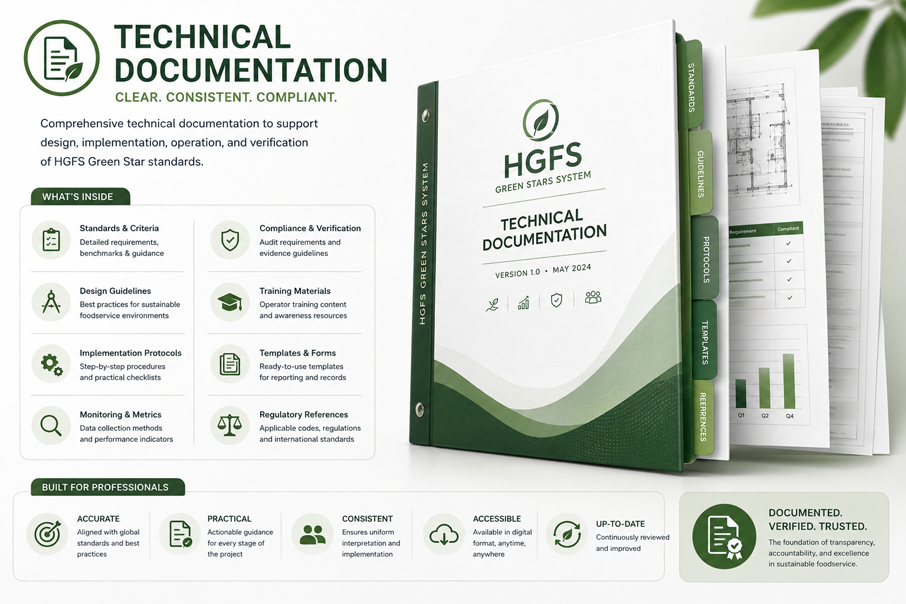

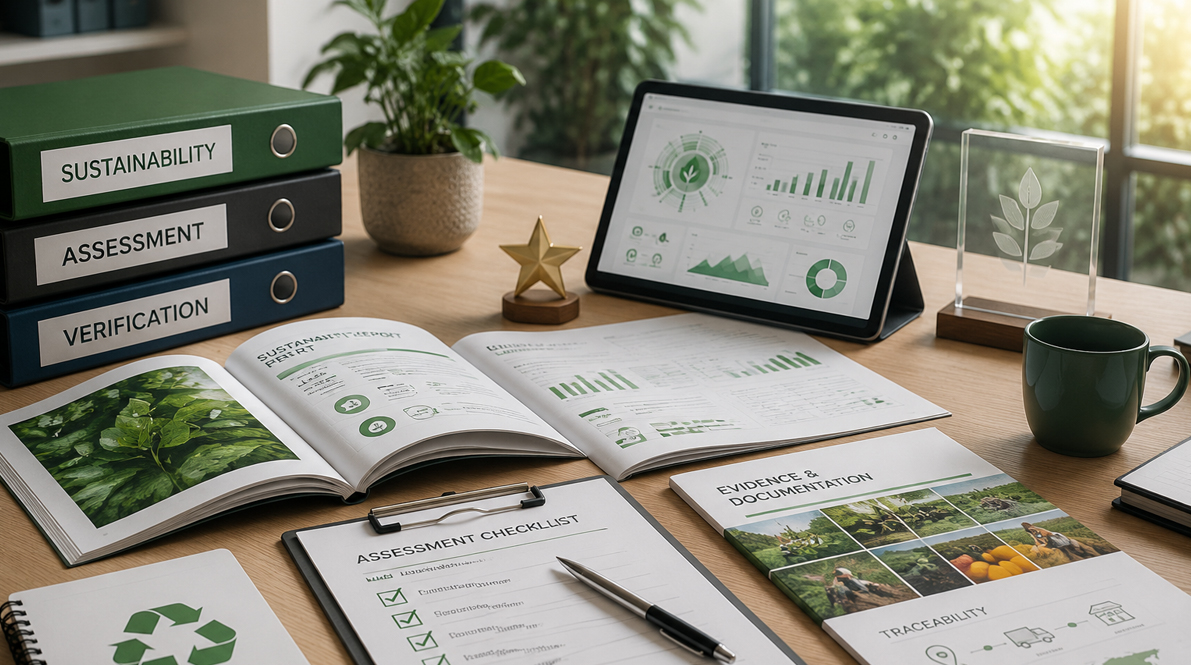
The HGFS Assessment Process is the official evaluation framework used to determine an organization's alignment with the principles, requirements, and sustainability objectives of the Helix Green Food Standards (HGFS). Designed to be transparent, evidence-based, and internationally applicable, the assessment methodology provides a structured pathway for organizations seeking recognition through the HGFS Green Stars Rating System.
The assessment process is built upon the core values of scientific integrity, sustainability leadership, operational transparency, environmental responsibility, food-system resilience, and continuous improvement. Rather than relying solely on self-declared claims, HGFS utilizes a documented evaluation approach that emphasizes objective evidence, verifiable information, and measurable performance indicators.
Organizations participating in the assessment process may include food manufacturers, restaurants, beverage producers, agricultural operations, packaging companies, hospitality businesses, food-service providers, and other organizations operating within the global food ecosystem. The framework is designed to accommodate organizations of different sizes, operational models, and levels of sustainability maturity.
The purpose of assessment is not merely to evaluate compliance, but to encourage continuous improvement and recognize organizations that demonstrate meaningful commitment to sustainability, transparency, innovation, responsible resource management, and consumer trust. The Green Stars framework rewards progress while providing organizations with a clear roadmap for future development.
Throughout the assessment process, organizations are evaluated against relevant HGFS standards, sustainability criteria, operational practices, documentation systems, traceability mechanisms, environmental initiatives, and governance structures. Assessment outcomes contribute directly to Green Stars ratings and help communicate sustainability performance to stakeholders, consumers, partners, and investors.
Transparency is a fundamental component of the HGFS methodology. Organizations are encouraged to provide accurate documentation, supporting evidence, operational records, and sustainability information that can be independently reviewed and verified. This approach strengthens credibility while supporting confidence in assessment outcomes.
The assessment framework is designed to be practical, scalable, and applicable across diverse sectors while maintaining consistent evaluation principles. By combining structured review processes, evidence-based assessment methodologies, and independent verification mechanisms, HGFS aims to create a trusted and internationally recognized sustainability assessment system.
This page provides a detailed overview of the complete HGFS Assessment Process, including assessment stages, documentation requirements, verification procedures, evaluation criteria, scoring methodology, timelines, and pathways toward Green Stars recognition.
The HGFS Assessment Process has been developed to provide a structured, transparent, and evidence-based methodology for evaluating sustainability performance across organizations operating within the global food ecosystem. As sustainability expectations continue to evolve, businesses are increasingly expected to demonstrate measurable commitments to environmental stewardship, responsible resource management, transparency, food-system resilience, and continuous improvement. The HGFS assessment framework was designed to support these objectives while providing a credible pathway toward Green Stars recognition.
Unlike traditional compliance-focused systems that often rely on simple pass-or-fail outcomes, the HGFS Assessment Process emphasizes continuous improvement and progressive achievement. Organizations are evaluated not only on their current performance but also on their commitment to sustainability development, operational maturity, innovation, transparency, and long-term environmental responsibility. This approach encourages organizations to view sustainability as an ongoing journey rather than a single destination.
The assessment methodology is based upon internationally recognized principles of sustainability governance, responsible food systems, environmental stewardship, transparency, traceability, and operational excellence. These principles are integrated throughout the HGFS standards and serve as the foundation for all assessment activities. Whether evaluating a restaurant, food manufacturer, beverage producer, agricultural operation, or packaging company, the same commitment to consistency and objectivity is maintained.
A key objective of the HGFS framework is to create confidence among stakeholders. Consumers, investors, business partners, regulators, and communities increasingly seek reliable information regarding sustainability performance and responsible business practices. Assessment provides a mechanism for validating sustainability claims through documented evidence and structured review processes. This contributes to greater transparency and helps strengthen trust between organizations and their stakeholders.
The HGFS Assessment Process is designed to evaluate organizations holistically. Sustainability performance is influenced by multiple interconnected factors including governance systems, environmental initiatives, resource management, operational controls, supply-chain practices, transparency measures, social responsibility efforts, and innovation activities. The framework therefore considers multiple dimensions of organizational performance rather than focusing on a single indicator or isolated metric.
Evidence-based evaluation represents one of the most important characteristics of the HGFS methodology. Assessment decisions are supported by documentation, records, policies, procedures, operational evidence, performance data, sustainability initiatives, traceability systems, and other verifiable sources of information. This evidence-based approach improves consistency while reducing subjectivity within the evaluation process.
Transparency remains central to the assessment philosophy. Participating organizations are encouraged to provide accurate and complete information regarding operations, sustainability initiatives, environmental performance, governance systems, and relevant management practices. Transparency supports accountability while enabling a more comprehensive understanding of organizational sustainability performance.
The assessment process also recognizes that organizations may be at different stages of sustainability maturity. Some participants may be beginning their sustainability journey, while others may already operate advanced environmental and social responsibility programs. The Green Stars framework accommodates these differences by rewarding progress and encouraging continuous advancement toward higher levels of sustainability leadership.
Independent verification plays an important role in strengthening assessment credibility. Where appropriate, supporting evidence may be reviewed, validated, and assessed against established criteria to ensure consistency and reliability. Verification activities help maintain confidence in the integrity of assessment outcomes while supporting stakeholder trust.
The HGFS framework further emphasizes practicality and scalability. Organizations of different sizes, sectors, and geographic locations should be able to participate in assessment activities without unnecessary complexity. The methodology is therefore designed to be flexible enough to accommodate diverse operational environments while maintaining rigorous sustainability principles.
Continuous improvement is a defining feature of the HGFS philosophy. Sustainability challenges continue to evolve as environmental conditions, technologies, stakeholder expectations, and regulatory landscapes change over time. Organizations are encouraged to review performance regularly, identify opportunities for enhancement, implement corrective actions when necessary, and pursue higher levels of sustainability achievement.
Assessment outcomes contribute directly to the HGFS Green Stars Rating System. Green Stars provide a structured mechanism for recognizing sustainability maturity and operational excellence while communicating performance achievements in a manner that is understandable to consumers, business partners, and other stakeholders. Higher ratings reflect stronger alignment with HGFS principles and more advanced sustainability performance.
The framework also supports broader organizational objectives including ESG initiatives, sustainability reporting, responsible sourcing programs, environmental management systems, climate-action strategies, and stakeholder engagement efforts. Many organizations utilize assessment outcomes as part of their broader sustainability and governance activities.
Importantly, the HGFS Assessment Process is not intended to function solely as an evaluation mechanism. It also serves as an educational and developmental framework that helps organizations identify strengths, recognize improvement opportunities, benchmark performance, and build more resilient and sustainable operations over time.
Through a combination of structured evaluation, evidence-based review, transparent methodologies, independent verification principles, and continuous improvement objectives, the HGFS Assessment Process seeks to establish a trusted and internationally relevant model for sustainability assessment within the global food ecosystem.
Organizations that participate in the assessment process demonstrate a willingness to engage with sustainability principles in a measurable and accountable manner. This commitment contributes not only to organizational performance but also to the broader goals of environmental protection, responsible food systems, consumer confidence, and long-term sustainability.
The HGFS Assessment Process is guided by a set of core principles designed to ensure consistency, transparency, credibility, and fairness across all evaluations. These principles serve as the foundation of the HGFS methodology and help maintain confidence in Green Stars ratings and sustainability assessments conducted under the HGFS framework.
HGFS assessments are founded upon scientific evidence, internationally recognized sustainability concepts, responsible food-system practices, environmental stewardship principles, and measurable performance indicators. Evaluation criteria are developed to encourage objective analysis and evidence-based decision-making rather than subjective interpretation. Organizations are assessed based on documented practices, measurable outcomes, and verifiable sustainability initiatives that demonstrate meaningful commitment to responsible operations.
Transparency is essential for building trust among consumers, stakeholders, partners, and participating organizations. The HGFS framework encourages accurate documentation, clear communication, accessible evidence, and openness regarding sustainability activities and operational practices. Transparent assessment processes help strengthen accountability while supporting confidence in evaluation outcomes and Green Stars ratings.
Assessment decisions should be based on evidence rather than assumptions. HGFS promotes objective evaluation methodologies that focus on documented information, operational performance, management systems, sustainability initiatives, and measurable indicators. Consistent criteria help ensure that organizations are evaluated fairly while reducing unnecessary bias and subjective interpretation.
Sustainability extends beyond environmental performance alone. The HGFS methodology recognizes the interconnected nature of environmental stewardship, social responsibility, governance practices, food safety, transparency, operational resilience, and long-term value creation. Assessments therefore consider multiple dimensions of sustainability rather than focusing on isolated performance indicators.
The HGFS framework is designed to encourage progress over time. Organizations may be at different stages of sustainability maturity, and assessment should support advancement rather than simply identify deficiencies. Continuous improvement is therefore embedded throughout the Green Stars methodology, rewarding organizations that actively strengthen sustainability performance, governance systems, operational effectiveness, and environmental responsibility.
Credibility depends on reliable information and trustworthy evaluation processes. The HGFS methodology incorporates verification principles that support evidence review, documentation validation, consistency checks, and assessment integrity. Independent verification mechanisms help ensure that Green Stars ratings accurately reflect organizational performance while strengthening stakeholder confidence in assessment outcomes.
The HGFS Green Stars framework is designed to recognize organizations at different stages of sustainability maturity and operational development. Assessment requirements increase progressively across Green Stars levels to reflect greater expectations regarding documentation, transparency, sustainability performance, verification activities, and organizational commitment.
While all applicants are expected to provide basic organizational information and complete the official HGFS assessment questionnaire, higher Green Stars levels require additional evidence, expanded sustainability documentation, more advanced verification activities, and greater demonstration of continuous improvement practices.
The following overview illustrates the general assessment expectations associated with each Green Stars level. Specific requirements may vary depending on the assessment scope, organizational size, industry sector, operational complexity, and applicable HGFS standards.
The 1 Star level recognizes organizations that demonstrate basic alignment with HGFS principles and successfully complete foundational assessment requirements.
Official HGFS Application Form
Basic Assessment Questionnaire
Business Registration Documentation
Operating License or Permit (if applicable)
Company Profile
Facility or Product Photos
Self-Declaration of Compliance
Remote Assessment
Organizations seeking 2 Stars are expected to demonstrate basic sustainability practices supported by documented operational evidence.
All 1 Star Requirements
Extended Sustainability Questionnaire
Food Safety or Hygiene Documentation
Basic Waste Management Evidence
Packaging Information
Basic Traceability Information
Operational Sustainability Information
Remote Assessment
Organizations applying for 3 Stars should demonstrate structured sustainability management supported by documented policies, procedures, and operational records.
All 2 Stars Requirements
Advanced Assessment Questionnaire
Sustainability Policy
Supplier Information
Traceability Records
Environmental Practices Documentation
Operational Procedures
Evidence Verification
Additional Information Requests (if required)
The 4 Stars level is intended for organizations demonstrating advanced sustainability systems, strong governance structures, and measurable environmental performance.
All 3 Stars Requirements
Professional Sustainability Questionnaire
ESG Information
Sustainability Metrics
Staff Training Records
Continuous Improvement Programs
Supporting Evidence Portfolio
Virtual Assessment Interview
Virtual Facility Review or Site Assessment (if applicable)
The 5 Stars level represents the highest level of HGFS recognition and is reserved for organizations demonstrating exceptional sustainability leadership, transparency, governance, innovation, and long-term commitment to responsible food systems.
All 4 Stars Requirements
Executive Sustainability Questionnaire
Comprehensive Sustainability Report
Environmental Performance Indicators
Advanced Traceability Systems
Sustainability KPIs and Performance Data
Strategic Sustainability Plan
Management Interview
On-Site Assessment or Independent Site Verification
Organizations may submit documents in their local language; however, HGFS may request English translations for selected documents when necessary to support assessment and verification activities.
Assessment requirements may vary depending on the applicable HGFS standard, organizational complexity, geographic location, operational scope, and selected Green Stars level.
Additional supporting evidence, clarification requests, interviews, virtual reviews, or verification activities may be required to ensure the integrity and consistency of assessment outcomes.
Documentation plays a central role in the HGFS Assessment Process. Assessment decisions are based on evidence, transparency, operational information, and verifiable records that demonstrate alignment with HGFS principles and sustainability requirements. The purpose of documentation review is not only to confirm compliance but also to understand the maturity, consistency, and effectiveness of an organization's sustainability practices.
Organizations applying for assessment are encouraged to prepare accurate, complete, and up-to-date documentation relevant to their operations. Documentation requirements may vary depending on the selected Green Stars level, industry sector, assessment scope, organizational size, and operational complexity. Additional information may be requested when necessary to support verification activities.
While some documents are considered mandatory for all applicants, higher Green Stars levels typically require more extensive sustainability evidence, performance data, operational records, and governance documentation.
Business Registration Certificate
Operating License or Permit (if applicable)
Company Profile
Organizational Information
Business Address and Contact Information
Ownership or Management Information
Official Website or Business Profile
Scope of Assessment Application
Sustainability Policy
Environmental Policy
Resource Management Practices
Waste Management Information
Energy Efficiency Initiatives
Water Stewardship Activities
Continuous Improvement Programs
Environmental Performance Data (if available)
Operational Procedures
Food Safety Procedures
Quality Management Documentation
Staff Training Records
Supplier Information
Procurement Practices
Operational Monitoring Records
Internal Review Procedures
Traceability Records
Product Information
Ingredient or Material Information
Supply Chain Information
Transparency Statements
Consumer Information Materials
Labeling Information
QR Verification Information (if applicable)
Facility Photographs
Product Photographs
Process Documentation
Certificates Held by the Organization
Environmental Reports
Performance Metrics
ESG Information (if available)
Additional Evidence Supporting Assessment
Documents may be submitted in the organization's local language. However, HGFS may request English translations of selected documents when necessary to support assessment and verification activities.
Documentation requirements increase progressively across Green Stars levels. Higher ratings typically require additional evidence, expanded sustainability information, more detailed operational records, and stronger verification support.
Submission of documentation does not guarantee a specific Green Stars rating. Assessment outcomes are determined through evaluation of evidence quality, organizational performance, sustainability maturity, verification findings, and alignment with applicable HGFS standards.
The HGFS Application and Verification Process is designed to ensure transparency, consistency, fairness, and credibility throughout the assessment journey. Organizations seeking Green Stars recognition are required to complete a structured application process, provide supporting documentation, participate in verification activities when applicable, and successfully complete the assessment review process before receiving official recognition.
The process combines digital application management, documentation review, evidence verification, sustainability assessment, and final recognition procedures to ensure that Green Stars ratings accurately reflect organizational performance and sustainability maturity.
Organizations begin by creating an official HGFS account through the assessment portal. The account serves as the primary platform for managing applications, submitting documentation, communicating with assessors, and monitoring assessment progress.
Applicants complete the appropriate HGFS assessment questionnaire based on the selected standard and desired Green Stars level. Questionnaires are designed to collect information regarding sustainability practices, operational systems, governance, transparency, environmental performance, and organizational activities.
Organizations upload supporting documentation and evidence through the assessment portal. Documentation may include business registrations, operational records, sustainability policies, traceability information, environmental data, certifications, photographs, and other supporting materials.
Following successful submission of application materials, applicants complete payment of the applicable assessment fee. Assessment activities begin after confirmation of payment and successful registration within the HGFS assessment system.
HGFS reviewers conduct an initial review of submitted documentation to evaluate completeness, consistency, and alignment with assessment requirements. Additional information may be requested if clarification is needed.
Verification activities may include evidence validation, documentation review, interviews, virtual facility reviews, supporting information requests, or on-site assessments depending on the selected Green Stars level and assessment scope.
Assessment findings are consolidated and evaluated against applicable HGFS criteria. A final Green Stars determination is made based on documented evidence, assessment results, verification outcomes, and overall sustainability performance.
Organizations that successfully complete the assessment process receive official HGFS recognition and may be awarded the corresponding Green Stars rating. Digital certificates, recognition materials, and authorization to display applicable HGFS marks may be provided in accordance with program requirements.
The HGFS Assessment Process is designed to be efficient, transparent, and scalable while maintaining the integrity of evaluation and verification activities. Assessment timelines may vary depending on the selected Green Stars level, the completeness of submitted documentation, organizational complexity, verification requirements, and responsiveness during the review process.
Organizations that provide complete applications and supporting evidence typically experience a faster assessment process. Additional verification activities, clarification requests, interviews, virtual reviews, or site assessments may extend the overall timeline when necessary.
The following timeline provides a general overview of the standard assessment journey. Actual timelines may vary based on assessment scope and organizational circumstances.
Account Registration & Application Submission — 1 to 3 Business Days
Questionnaire Completion & Document Upload — 1 to 2 Weeks
Initial Documentation Review — 3 to 7 Business Days
Clarification Requests (if required) — 1 to 2 Weeks
Verification Activities — 1 to 3 Weeks
Final Assessment Review — 3 to 5 Business Days
Green Stars Decision — 1 to 3 Business Days
Certificate Issuance & Recognition — Within 5 Business Days
Because assessment requirements increase with each Green Stars level, the overall duration may vary depending on the complexity of the review and verification activities involved.
1 Star Assessment — Approximately 1 to 2 Weeks
2 Stars Assessment — Approximately 2 to 3 Weeks
3 Stars Assessment — Approximately 3 to 5 Weeks
4 Stars Assessment — Approximately 4 to 8 Weeks
5 Stars Assessment — Approximately 6 to 12 Weeks
Additional Verification Activities May Extend Timelines
Assessment timelines are estimates only and should not be interpreted as guaranteed completion periods. The duration of assessment activities depends on the completeness of submitted information, the quality of supporting evidence, the responsiveness of applicants, and any additional verification requirements identified during the review process.
Organizations seeking 4 Stars or 5 Stars recognition may be subject to enhanced verification activities, management interviews, virtual facility reviews, or on-site assessments, which can increase the overall duration of the assessment process.
HGFS reserves the right to request additional information, supporting documentation, clarification, or verification activities when necessary to maintain assessment integrity and ensure accurate Green Stars determinations.
Food manufacturers, restaurants, beverage companies, agricultural organizations, packaging producers, food-service providers, hospitality businesses, and other organizations operating within the food ecosystem may apply for HGFS assessment.
Yes. The HGFS framework is designed to support organizations across different countries, regions, and operational environments through a globally applicable sustainability assessment methodology.
Yes. The HGFS framework is designed to support organizations across different countries, regions, and operational environments through a globally applicable sustainability assessment methodology.
Required documentation may include business registration records, operating licenses, sustainability information, operational procedures, traceability documentation, and supporting evidence relevant to the selected Green Stars level.
Yes. Organizations may submit documents in their local language. HGFS may request English translations of selected documents when necessary for assessment or verification purposes.
Yes. Organizations may submit documents in their local language. HGFS may request English translations of selected documents when necessary for assessment or verification purposes.
Assessment timelines vary depending on the selected Green Stars level, documentation quality, verification requirements, and organizational responsiveness. Most assessments are completed within several weeks.
Assessment timelines vary depending on the selected Green Stars level, documentation quality, verification requirements, and organizational responsiveness. Most assessments are completed within several weeks.
No. Green Stars ratings are awarded based on assessment outcomes, evidence quality, verification findings, and overall alignment with applicable HGFS standards.
Yes. The HGFS framework encourages continuous improvement. Organizations may pursue reassessment after implementing additional sustainability initiatives and operational improvements.
Information submitted during assessment is handled in accordance with HGFS confidentiality and data-protection principles. Assessment information is used solely for evaluation and verification purposes.
Information submitted during assessment is handled in accordance with HGFS confidentiality and data-protection principles. Assessment information is used solely for evaluation and verification purposes.
Yes. The HGFS framework is scalable and suitable for organizations ranging from small businesses and family-owned operations to multinational enterprises.
Assessment evaluates organizational performance against HGFS standards and determines Green Stars recognition. Certification activities may include additional recognition, verification, or program-specific requirements.
Organizations can begin by creating an account, reviewing assessment requirements, preparing documentation, and submitting an application through the official HGFS assessment platform.
Organizations can begin by creating an account, reviewing assessment requirements, preparing documentation, and submitting an application through the official HGFS assessment platform.
Green Stars System
Verification Framework
Assessment Fees
Apply for Assessment