Address
Texas, United States

 Official HGFS Guidelines 2026 Released for Global Food Sustainability

support@helixgreen.org
HGFS (Helix Green Food Standard) is a science-based sustainability and food certification framework developed to support healthier, safer, and environmentally responsible food systems worldwide. HGFS provides international standards for restaurants, food brands, agriculture, beverages, and sustainable packaging operations.
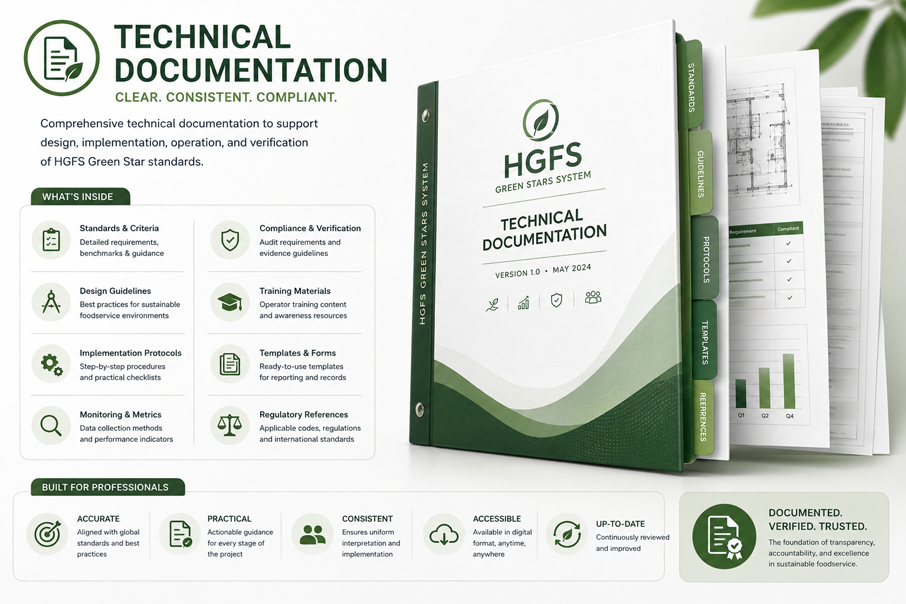

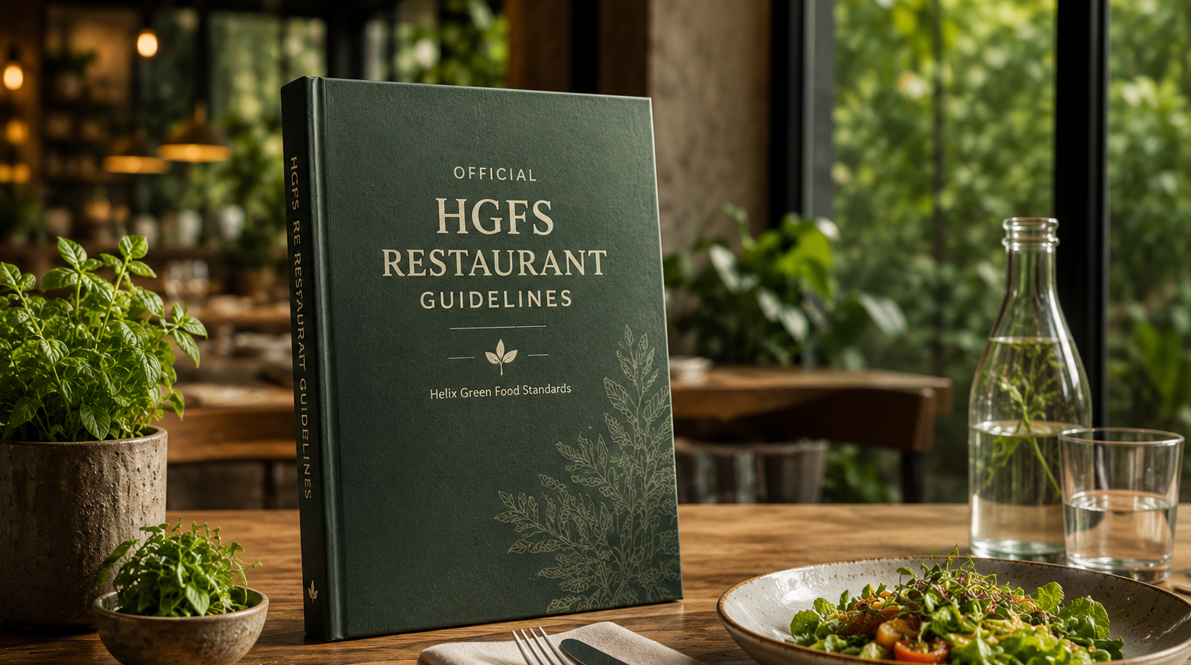

The Official HGFS Restaurant Guidelines establish a comprehensive international framework for evaluating restaurant operations through the integrated lenses of food safety, nutritional responsibility, sustainability, transparency, consumer wellbeing, operational excellence, and environmental stewardship. Developed by Helix Green Food Standards (HGFS), these guidelines provide science-based recommendations for restaurants, cafés, catering organizations, hospitality groups, institutional kitchens, food delivery operations, and emerging food service concepts seeking alignment with next-generation Green Food principles.
The restaurant industry plays a critical role in shaping public health outcomes, food consumption patterns, sustainability performance, and consumer trust. Every day, millions of meals are prepared, served, packaged, transported, and consumed through restaurant systems worldwide. As consumer expectations evolve, restaurants are increasingly expected to demonstrate accountability not only for food safety but also for ingredient sourcing, nutritional quality, environmental impact, waste management, resource efficiency, and transparency.
HGFS recognizes that modern restaurant operations extend far beyond food preparation. Restaurants influence agricultural demand, supply chain decisions, packaging consumption, energy use, water management, food waste generation, and consumer dietary habits. Consequently, sustainable restaurant management requires an integrated approach that considers the entire food service ecosystem rather than isolated operational activities.
The Official HGFS Restaurant Guidelines provide organizations with a practical roadmap for implementing responsible restaurant practices while maintaining culinary excellence, customer satisfaction, operational efficiency, and long-term sustainability. Through structured evaluation criteria and the HGFS Green Stars Rating System, restaurants can demonstrate measurable commitment to healthier, safer, more transparent, and environmentally responsible food service operations.
The framework is designed to be scalable and applicable to restaurants of all sizes, ranging from small independent establishments and cafés to multinational restaurant chains, luxury hospitality groups, institutional food services, healthcare dining facilities, and innovative cloud kitchen operations. By encouraging continuous improvement and evidence-based decision-making, HGFS supports the development of restaurant systems capable of meeting both current and future sustainability challenges.
The HGFS Restaurant Guidelines are founded on the principle that restaurants can serve as powerful drivers of positive change within global food systems. Through responsible sourcing, healthy menu development, sustainable operations, consumer education, and environmental stewardship, restaurants have the ability to influence both individual wellbeing and broader sustainability outcomes.
Under the HGFS framework, restaurant excellence is evaluated through a multidimensional approach that integrates food safety, hygiene, nutritional integrity, ingredient quality, sustainable procurement, waste reduction, energy efficiency, water stewardship, employee development, customer transparency, and continuous improvement. This approach reflects the growing recognition that food service organizations must balance business performance with social and environmental responsibility.
HGFS encourages restaurants to move beyond compliance-based management and adopt proactive strategies that create long-term value for customers, employees, suppliers, communities, and the environment. Rather than focusing solely on regulatory requirements, the framework promotes a culture of accountability, innovation, transparency, and measurable sustainability performance.
The guidelines also recognize the importance of consumer trust. Modern customers increasingly seek information regarding ingredient origins, nutritional quality, allergens, sustainability practices, ethical sourcing policies, and restaurant values. Organizations that provide transparent and accurate information are better positioned to build loyalty and strengthen their reputation within competitive food service markets.
By integrating science, sustainability, transparency, and operational excellence into a unified framework, the HGFS Restaurant Guidelines help restaurants contribute to healthier communities, more resilient food systems, and a more sustainable future for the global hospitality sector.
The Official HGFS Restaurant Guidelines evaluate restaurants across the complete food service lifecycle, from ingredient sourcing and kitchen operations to consumer communication and sustainability performance. The framework promotes continuous improvement through measurable standards and evidence-based operational practices.
Food Sourcing and Sustainable Procurement
Kitchen Hygiene and Food Safety Management
Healthy Cooking Practices
Oil Quality and Frying Management
Fresh Ingredient Standards
Food Waste Reduction Programs
Eco-Friendly Packaging Solutions
Staff Hygiene and Professional Training
Menu Transparency and Nutritional Disclosure
Customer Health Information Systems
Smart Kitchen Operations
HGFS Green Stars Rating Assessment
Food sourcing represents one of the most important foundations of restaurant quality, sustainability performance, consumer trust, and nutritional excellence. The HGFS Restaurant Guidelines recognize that the quality of a meal is directly influenced by the quality, origin, traceability, and sustainability of its ingredients. Consequently, restaurants are encouraged to establish responsible sourcing practices that prioritize ingredient integrity, supplier accountability, transparency, and long-term sustainability.
Modern consumers increasingly seek information regarding where food comes from, how it was produced, and whether sourcing decisions align with ethical and environmental values. Restaurants that implement transparent sourcing strategies are often better positioned to strengthen consumer confidence and differentiate themselves within highly competitive food service markets.
HGFS encourages restaurants to evaluate suppliers based on food safety performance, ingredient quality, sustainability practices, traceability capabilities, and compliance with applicable regulations. Supplier selection should not be based solely on cost considerations but should also consider long-term impacts on food quality, environmental performance, and customer satisfaction.
The framework supports the use of local and regional suppliers whenever operationally feasible. Local sourcing may contribute to reduced transportation emissions, stronger community engagement, improved freshness, and increased supply chain resilience. However, local sourcing alone does not guarantee sustainability and should be evaluated alongside quality, safety, and responsible production practices.
Restaurants are also encouraged to maintain documentation systems capable of tracing key ingredients throughout the supply chain. Effective traceability supports food safety investigations, quality assurance programs, supplier accountability, and consumer transparency initiatives.
Through responsible sourcing practices, restaurants can improve food quality, strengthen sustainability performance, support ethical supply chains, and contribute positively to broader food system resilience.
Kitchen hygiene serves as the foundation of safe and responsible restaurant operations. The HGFS Restaurant Guidelines establish comprehensive expectations for sanitation management, contamination prevention, employee hygiene, facility cleanliness, equipment maintenance, and food handling practices designed to protect both consumers and employees.
Restaurants operate in dynamic environments where raw ingredients, food preparation activities, customer service operations, and waste management processes occur simultaneously. Without effective hygiene controls, these activities may increase risks related to microbiological contamination, allergen exposure, foodborne illness, and operational inefficiencies.
HGFS encourages restaurants to establish documented sanitation procedures covering all food contact surfaces, equipment, utensils, preparation areas, storage facilities, and customer service environments. Cleaning activities should be performed consistently and verified through routine monitoring procedures.
Employee hygiene is another critical component of effective food safety management. Organizations should provide appropriate hygiene training, establish handwashing protocols, maintain protective clothing requirements, and promote a culture of food safety awareness throughout daily operations.
Cross-contamination prevention is emphasized throughout the framework. Restaurants are encouraged to implement systems that separate raw and ready-to-eat foods, manage allergens appropriately, control high-risk ingredients, and maintain sanitary workflows that reduce contamination opportunities.
Strong kitchen hygiene systems not only protect consumer health but also contribute to operational excellence, regulatory compliance, customer confidence, and long-term organizational reputation.
Restaurants have an important opportunity to support public health through responsible cooking practices and thoughtful menu development. The HGFS framework encourages culinary techniques that preserve nutritional quality, minimize unnecessary health risks, and enhance the overall value of food provided to consumers.
Healthy cooking does not require sacrificing taste, creativity, or cultural authenticity. Instead, the framework promotes evidence-based approaches that balance flavor, customer satisfaction, operational feasibility, and nutritional responsibility.
Organizations are encouraged to evaluate preparation methods that reduce excessive saturated fats, trans fats, sodium, added sugars, and unnecessary processing. Cooking techniques such as steaming, baking, roasting, grilling, and controlled sautéing may support healthier outcomes when implemented appropriately.
Ingredient quality remains central to healthy food preparation. Fresh vegetables, fruits, whole grains, legumes, quality proteins, herbs, spices, and minimally processed ingredients can contribute positively to menu quality and nutritional integrity.
Restaurants are encouraged to offer diverse menu options capable of supporting different dietary preferences and nutritional needs. This may include vegetarian, vegan, gluten-conscious, lower-sodium, or nutrient-focused menu offerings where appropriate.
The HGFS framework ultimately promotes a culinary philosophy that views restaurants not only as providers of enjoyable dining experiences but also as contributors to healthier communities and more sustainable food systems.
Oil management is a critical component of food quality, nutritional integrity, operational efficiency, and consumer health protection. The HGFS Restaurant Guidelines establish principles designed to support responsible oil selection, storage, usage, monitoring, and disposal practices throughout restaurant operations.
Cooking oils influence flavor, texture, nutritional composition, and food safety outcomes. Improper oil management may contribute to product degradation, undesirable flavor characteristics, increased oxidation, reduced nutritional quality, and potential health concerns.
Restaurants are encouraged to select oils appropriate for their intended culinary applications while considering nutritional profiles, stability characteristics, sustainability considerations, and product quality objectives. The framework supports efforts to reduce industrial trans fats and improve transparency regarding oil usage practices.
Oil monitoring procedures should be implemented for frying operations. Organizations are encouraged to establish replacement criteria, monitor degradation indicators, maintain equipment appropriately, and document key oil management activities where necessary.
Storage practices are equally important. Oils should be protected from excessive heat, light exposure, contamination, and environmental conditions that may accelerate deterioration. Proper inventory management can help preserve quality while reducing waste.
Responsible disposal and recycling practices should also be considered. Used cooking oil may represent an opportunity for recycling, resource recovery, and circular economy initiatives when managed through appropriate collection and processing systems.
By implementing structured oil management programs, restaurants can improve food quality, strengthen nutritional performance, reduce operational waste, and support responsible environmental practices.
Fresh ingredients represent one of the most visible indicators of restaurant quality and significantly influence food safety, nutritional value, sensory characteristics, and customer satisfaction. The HGFS Restaurant Guidelines encourage restaurants to establish systems that prioritize ingredient freshness, quality verification, traceability, proper storage, and responsible procurement practices throughout the food service lifecycle.
Consumers increasingly associate fresh ingredients with healthier meals, superior taste, higher nutritional value, and greater trust in restaurant operations. While freshness requirements vary depending on product type, cuisine style, and operational model, organizations are encouraged to implement objective procedures for evaluating ingredient quality upon receipt, during storage, and throughout food preparation processes.
Restaurants should establish supplier requirements that support consistent ingredient quality and reliable delivery performance. Receiving procedures may include inspection of appearance, temperature conditions, packaging integrity, expiration information, transportation conditions, and overall compliance with purchasing specifications.
Appropriate storage management is essential for preserving ingredient freshness. Organizations are encouraged to implement inventory rotation practices, monitor temperature-sensitive products, maintain hygienic storage conditions, and minimize unnecessary holding periods that may reduce quality or increase food waste.
Seasonal and locally available ingredients may provide opportunities for enhanced freshness, reduced transportation requirements, improved menu diversity, and stronger relationships with regional suppliers. However, all sourcing decisions should continue to prioritize safety, quality, consistency, and responsible production practices.
The HGFS framework ultimately promotes ingredient management systems that support food quality, nutritional integrity, operational efficiency, and positive dining experiences while reducing avoidable waste and strengthening consumer trust.
Food waste represents one of the most significant sustainability challenges facing the global food service industry. Restaurants generate waste through procurement inefficiencies, inventory losses, preparation activities, spoilage, overproduction, service operations, and post-consumer disposal. The HGFS Restaurant Guidelines encourage organizations to adopt systematic strategies for preventing, measuring, monitoring, and reducing food waste throughout restaurant operations.
Reducing food waste delivers multiple benefits including improved environmental performance, reduced operational costs, enhanced resource efficiency, and stronger sustainability outcomes. Every kilogram of wasted food represents lost agricultural inputs, water resources, energy consumption, transportation activities, labor efforts, and packaging materials.
Organizations are encouraged to identify major sources of waste generation and establish measurable reduction objectives. Waste monitoring programs can help restaurants understand operational inefficiencies and identify opportunities for process improvement.
Menu planning plays an important role in waste prevention. Effective forecasting, flexible menu design, ingredient cross-utilization strategies, and demand-based production systems can help reduce unnecessary inventory losses while maintaining customer satisfaction.
Restaurants are encouraged to explore donation programs, food recovery initiatives, composting systems, animal feed partnerships, and other responsible diversion strategies where permitted by local regulations. These initiatives may contribute to circular economy objectives while reducing landfill dependence.
Employee engagement is essential to successful waste reduction programs. Staff members should understand waste prevention objectives, inventory management practices, portion control strategies, and operational procedures that support efficient resource utilization.
The HGFS framework views food waste reduction not only as an environmental responsibility but also as an important indicator of operational excellence and long-term sustainability leadership.
Packaging has become an increasingly important component of restaurant sustainability, particularly as takeout, delivery services, and digital ordering platforms continue to expand globally. The HGFS Restaurant Guidelines encourage organizations to adopt packaging solutions that balance food protection, customer convenience, operational practicality, and environmental responsibility.
Packaging should effectively protect food quality, maintain safety, preserve product integrity, and support customer satisfaction while minimizing unnecessary environmental impacts. Organizations are encouraged to evaluate packaging materials based on functionality, recyclability, compostability, durability, and lifecycle considerations.
The framework supports efforts to reduce single-use packaging where practical and encourages the exploration of reusable, recyclable, compostable, or lower-impact alternatives that meet operational requirements. However, sustainability initiatives should never compromise food safety, hygiene, or product quality.
Restaurants are encouraged to work with suppliers that demonstrate responsible packaging practices and provide transparent information regarding material composition, environmental performance, and disposal requirements.
Consumer education may also contribute to packaging sustainability goals. Clear disposal instructions, recycling guidance, and sustainability communication can help customers participate more effectively in responsible waste management practices.
As food delivery services continue to grow, packaging decisions increasingly influence the environmental footprint of restaurant operations. The HGFS framework therefore promotes packaging strategies that support both operational effectiveness and long-term sustainability objectives.
Employees represent one of the most important assets within any restaurant operation. Their knowledge, skills, attitudes, and daily practices directly influence food safety, customer experience, operational efficiency, sustainability performance, and organizational culture. The HGFS Restaurant Guidelines therefore place significant emphasis on staff hygiene, competency development, and continuous professional education.
Restaurant personnel should receive training appropriate to their responsibilities and operational roles. Training programs may include food safety principles, personal hygiene requirements, contamination prevention, allergen awareness, cleaning procedures, emergency response protocols, sustainability initiatives, waste reduction practices, and customer service expectations.
Personal hygiene is fundamental to protecting food safety and public health. Employees are encouraged to follow established handwashing procedures, maintain clean uniforms, utilize protective equipment when required, and comply with organizational health and hygiene policies.
Organizations should promote a culture in which food safety and responsible operational practices are viewed as shared responsibilities rather than isolated compliance activities. Leadership engagement, ongoing communication, and continuous learning opportunities can strengthen employee commitment to organizational objectives.
Professional development extends beyond regulatory compliance. Restaurants are encouraged to support culinary education, sustainability awareness, nutrition literacy, customer communication skills, digital competency, and leadership development initiatives that contribute to long-term organizational success.
Well-trained employees are often better equipped to identify risks, solve problems, improve operational performance, support innovation, and contribute positively to customer experiences. Consequently, investment in workforce development should be viewed as a strategic component of restaurant excellence rather than simply a regulatory requirement.
Through strong hygiene practices, continuous education, and professional development, restaurants can strengthen operational performance while creating safer, healthier, and more sustainable food service environments.
Menu transparency has become an increasingly important expectation within modern food service environments. Consumers seek clear, accurate, and accessible information that supports informed dining decisions while building confidence in restaurant operations. The HGFS Restaurant Guidelines encourage restaurants to adopt transparent menu practices that communicate meaningful information regarding ingredients, preparation methods, allergens, nutritional characteristics, and sustainability considerations.
Transparency helps strengthen trust between restaurants and consumers. Customers are more likely to feel confident when they understand what ingredients are being used, how dishes are prepared, and whether menu claims are supported by verifiable information. Transparency also supports individuals with specific dietary requirements, allergies, health conditions, or personal food preferences.
Restaurants are encouraged to provide accurate descriptions of menu items and avoid misleading terminology that may create confusion regarding ingredients, preparation methods, sourcing practices, or nutritional characteristics. Claims relating to health benefits, sustainability performance, local sourcing, organic production, or functional ingredients should be supported by appropriate evidence whenever communicated publicly.
The framework encourages the use of digital technologies that expand transparency beyond traditional printed menus. QR codes, digital menu systems, ingredient databases, and interactive customer information platforms can provide additional details regarding sourcing, allergens, nutritional values, and sustainability initiatives.
Menu transparency ultimately supports consumer empowerment, organizational accountability, and stronger relationships between restaurants and the communities they serve. Through honest communication and accessible information, restaurants can enhance trust while contributing to healthier and more informed food choices.
Restaurants play a significant role in shaping dietary habits and influencing public health outcomes. The HGFS Restaurant Guidelines encourage food service organizations to support consumer wellbeing by providing practical, accessible, and evidence-based health information that helps customers make informed dining decisions.
Customer health information may include nutritional disclosures, allergen information, ingredient transparency, dietary suitability guidance, and educational resources that promote healthier food choices. While restaurants are not expected to provide medical advice, they can contribute positively to public health through clear communication and responsible menu design.
The framework recognizes the increasing prevalence of food allergies, dietary restrictions, and health-related food preferences. Restaurants are encouraged to establish procedures that support accurate allergen identification, staff awareness, customer communication, and risk reduction strategies. Clear allergen information can significantly improve consumer safety and confidence.
Where feasible, restaurants may provide nutritional information related to calories, macronutrients, sodium content, sugar levels, or other relevant nutritional indicators. Such information should be presented clearly and accurately to avoid confusion or misinterpretation.
Educational initiatives can also contribute to customer wellbeing. Restaurants may choose to highlight healthier menu options, promote balanced meal choices, encourage responsible portion sizes, or communicate sustainability and nutrition initiatives that align with their organizational values.
By supporting informed decision-making and responsible communication, restaurants can contribute positively to public health while strengthening customer trust and long-term brand credibility.
Sustainable procurement represents one of the most influential tools available to restaurants seeking to improve environmental performance, supply chain resilience, food quality, and social responsibility. Purchasing decisions influence agricultural practices, manufacturing systems, transportation requirements, packaging consumption, labor conditions, and overall sustainability outcomes throughout the food value chain.
The HGFS Restaurant Guidelines encourage organizations to integrate sustainability considerations into procurement policies, supplier evaluations, purchasing decisions, and long-term sourcing strategies. Sustainable procurement should balance quality, safety, availability, affordability, environmental responsibility, and ethical considerations.
Organizations are encouraged to establish supplier selection criteria that evaluate factors such as food safety performance, product quality, traceability capabilities, environmental practices, labor standards, and transparency commitments. Strong supplier relationships can contribute to greater consistency, reliability, and continuous improvement throughout the supply chain.
Local and regional sourcing initiatives may provide additional benefits including reduced transportation distances, stronger community engagement, improved freshness, and increased economic support for local producers. However, sustainable procurement should always consider overall sustainability performance rather than geographic proximity alone.
The framework also encourages restaurants to evaluate opportunities for reducing unnecessary packaging, selecting environmentally preferable products, supporting responsible agriculture, and collaborating with suppliers that demonstrate measurable sustainability commitments.
Through responsible procurement strategies, restaurants can influence sustainability outcomes far beyond their own facilities while contributing to healthier, more resilient, and more transparent food systems.
Technology and digital innovation are transforming restaurant operations worldwide. The HGFS Restaurant Guidelines recognize the growing role of smart kitchen systems in improving food safety, operational efficiency, sustainability performance, quality control, and customer satisfaction. Smart kitchen operations leverage data, automation, monitoring systems, and digital tools to support better decision-making throughout restaurant activities.
Digital technologies may assist restaurants in managing inventory, monitoring temperatures, reducing waste, optimizing energy consumption, improving maintenance scheduling, supporting traceability, and strengthening documentation processes. These capabilities can contribute to improved consistency and operational resilience.
Temperature monitoring systems, digital food safety records, predictive maintenance tools, smart refrigeration technologies, automated inventory platforms, and energy management systems are examples of technologies that may support smarter restaurant operations. The adoption of such systems should be aligned with organizational objectives and operational requirements.
The framework encourages restaurants to use technology not only for efficiency gains but also for sustainability improvements. Smart resource management can help reduce food waste, optimize water consumption, minimize energy use, and improve overall environmental performance.
Data-driven decision-making enables organizations to identify inefficiencies, monitor performance trends, evaluate sustainability initiatives, and implement evidence-based improvements. As digital transformation continues to accelerate across the hospitality sector, smart kitchen capabilities are increasingly becoming indicators of operational maturity and future readiness.
HGFS supports responsible innovation and encourages organizations to explore technologies that enhance food quality, sustainability, transparency, and customer experience while maintaining human oversight and accountability.
The HGFS Restaurant Green Stars Rating System serves as the official recognition framework for evaluating restaurant sustainability, operational excellence, food quality, transparency, and responsible business performance. Rather than relying on a simple pass-or-fail certification model, the Green Stars system recognizes progressive achievement across multiple dimensions of restaurant management.
The assessment framework evaluates food sourcing practices, kitchen hygiene systems, menu transparency, nutritional responsibility, sustainability initiatives, waste management programs, staff training, packaging performance, customer communication, resource efficiency, and continuous improvement efforts. This multidimensional methodology provides a comprehensive picture of restaurant performance.
One-Star Restaurants demonstrate basic compliance with essential HGFS requirements and foundational operational controls. Two-Star Restaurants exhibit structured management systems, improved documentation, stronger food safety practices, and measurable sustainability initiatives.
Three-Star Restaurants demonstrate advanced implementation of sustainability programs, enhanced transparency, traceability capabilities, responsible procurement systems, and stronger environmental performance indicators. At this level, organizations typically maintain mature management systems and evidence-based improvement processes.
Four-Star Restaurants represent leadership within the restaurant industry through comprehensive sustainability integration, advanced operational controls, strong customer engagement, responsible sourcing programs, and measurable contributions to environmental stewardship and public health.
Five-Star Restaurants represent the highest level of HGFS recognition. These organizations demonstrate industry-leading performance in sustainability, food quality, innovation, transparency, operational excellence, consumer trust, and continuous improvement. They serve as models of responsible restaurant management and contribute actively to the advancement of healthier and more sustainable food systems.
The Green Stars framework encourages ongoing development by recognizing progress and providing restaurants with a clear pathway toward higher levels of performance and international recognition.
The HGFS Restaurant Guidelines are an international framework developed by Helix Green Food Standards (HGFS) to evaluate restaurant operations through food safety, sustainability, nutrition, transparency, responsible sourcing, employee development, and continuous improvement principles.
HGFS Restaurant Certification may be applicable to restaurants, cafés, catering organizations, food delivery operations, hotel restaurants, institutional kitchens, hospitality groups, food courts, and cloud kitchen businesses.
Yes. Food safety and kitchen hygiene represent core pillars of the HGFS Restaurant Guidelines. Organizations are evaluated on hygiene practices, contamination prevention, sanitation management, employee training, and food handling procedures.
Yes. The framework evaluates nutritional responsibility, healthy cooking practices, menu transparency, ingredient quality, and customer health information initiatives that support informed food choices.
Sustainable procurement refers to sourcing practices that consider food quality, supplier responsibility, environmental impact, traceability, ethical considerations, and long-term sustainability performance when selecting ingredients and products.
The framework encourages restaurants to measure, monitor, prevent, and reduce food waste through improved inventory management, operational efficiency, food recovery programs, recycling initiatives, and continuous improvement activities.
Menu transparency refers to providing consumers with accurate information regarding ingredients, allergens, preparation methods, nutritional characteristics, and sustainability-related claims that support informed dining decisions.
Yes. Sustainability is a central component of the framework and includes waste reduction, resource efficiency, energy management, water stewardship, sustainable procurement, packaging performance, and environmental responsibility.
The Green Stars Rating System is a progressive recognition model that awards restaurants from One Star to Five Stars based on operational maturity, sustainability performance, transparency, food quality, and continuous improvement achievements.
Yes. The HGFS framework is designed to be scalable and applicable to organizations of different sizes, including independent restaurants, cafés, family-owned businesses, and multinational hospitality groups.
Digital systems are encouraged but not always mandatory. Organizations may use technology to strengthen traceability, food safety documentation, inventory management, sustainability monitoring, and customer communication.
HGFS promotes continual improvement. Restaurants are encouraged to establish objectives, monitor indicators, review performance regularly, and implement improvements whenever opportunities are identified.
Higher ratings demonstrate stronger sustainability leadership, enhanced transparency, improved operational systems, greater consumer confidence, and higher levels of alignment with international Green Food principles.
HGFS is designed as an international framework supporting responsible food systems, sustainability, transparency, nutrition, and continuous improvement across global food service and hospitality sectors.


The complete Official HGFS Restaurant Guidelines provide detailed requirements, implementation recommendations, evaluation methodologies, Green Stars Rating criteria, sustainability expectations, food safety requirements, and certification guidance for restaurant organizations seeking HGFS recognition.
Organizations interested in implementing the framework are encouraged to review the full guideline document and assess opportunities for integration within existing operational systems.