Address
Texas, United States

 Official HGFS Guidelines 2026 Released for Global Food Sustainability

support@helixgreen.org
HGFS (Helix Green Food Standard) is a science-based sustainability and food certification framework developed to support healthier, safer, and environmentally responsible food systems worldwide. HGFS provides international standards for restaurants, food brands, agriculture, beverages, and sustainable packaging operations.
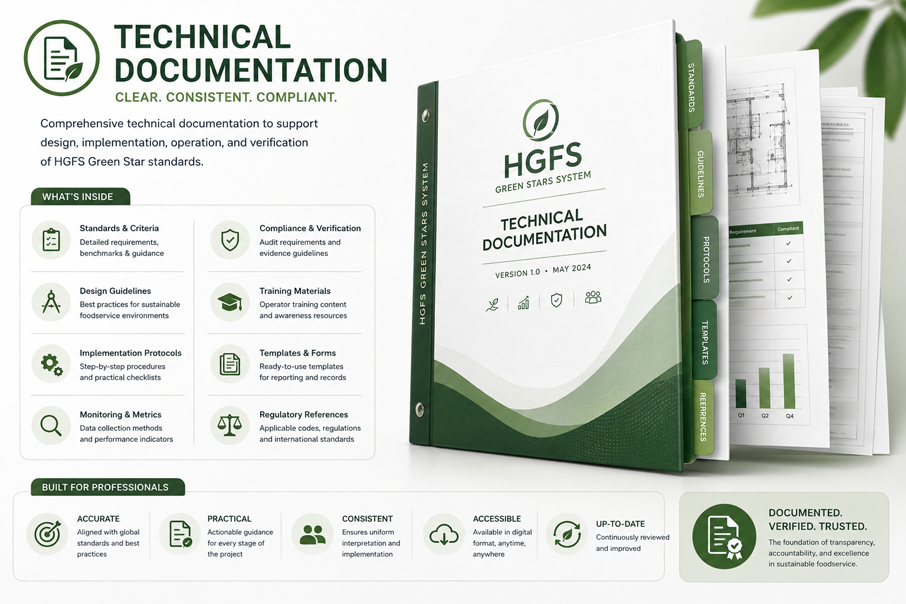



The Official HGFS Food Guidelines establish a comprehensive international framework for evaluating food systems through the integrated lenses of human health, nutritional integrity, sustainability, transparency, responsible biotechnology, environmental stewardship, and consumer trust. Developed under the Helix Green Food Standards (HGFS) initiative, the framework provides science-based guidance for food manufacturers, processors, retailers, restaurants, agricultural organizations, food technology innovators, and sustainable food enterprises seeking alignment with next-generation green food principles.
The global food industry is experiencing a significant transformation driven by increasing awareness of public health challenges, environmental sustainability, resource efficiency, supply chain transparency, responsible sourcing, and food technology innovation. Consumers no longer evaluate food solely through taste, convenience, or price. Modern consumers increasingly demand transparency regarding ingredients, sourcing practices, sustainability performance, nutritional quality, packaging impact, and corporate responsibility.
HGFS was established to address these emerging expectations through a structured, measurable, and globally adaptable framework capable of supporting organizations across diverse food sectors. Unlike traditional food standards that focus primarily on regulatory compliance or food safety controls, HGFS adopts a multidimensional ecosystem approach that evaluates the complete food lifecycle from raw material sourcing and agricultural practices to processing, packaging, storage, transportation, retail presentation, consumer communication, and post-consumption sustainability outcomes.
The framework integrates principles from food science, sustainability management, environmental responsibility, biotechnology governance, nutritional sciences, traceability systems, transparency practices, and continuous improvement methodologies. Through this integrated approach, HGFS seeks to encourage the development of food systems that simultaneously support consumer wellbeing, environmental protection, operational excellence, scientific innovation, and long-term sustainability.
HGFS recognizes that the future of food cannot be separated from broader global challenges including climate change, food security, population growth, biodiversity preservation, responsible resource utilization, and public health. As food systems become increasingly interconnected, organizations must adopt practices that improve accountability, transparency, and measurable sustainability performance while continuing to deliver safe, nutritious, accessible, and affordable products.
The Official HGFS Food Guidelines therefore provide organizations with a practical roadmap for implementing responsible food practices across all major operational functions. The framework encourages organizations to progressively improve food quality, sustainability performance, packaging systems, ingredient management, nutritional transparency, environmental impact reduction, and consumer trust through measurable and evidence-based initiatives.
HGFS certification is not designed as a simple pass-or-fail assessment. Instead, the framework promotes continuous advancement through a structured Green Stars Rating System that recognizes different levels of operational maturity, sustainability integration, transparency performance, and responsible food management. This approach encourages long-term improvement rather than short-term compliance and allows organizations to develop progressively more advanced food systems over time.
The HGFS framework is suitable for organizations of various sizes and operational complexities including food manufacturers, food processing facilities, agricultural producers, restaurants, hospitality organizations, beverage producers, sustainable food startups, biotechnology innovators, functional nutrition companies, and food supply chain operators. The scalability of the framework allows organizations to begin their sustainability journey while providing a clear pathway toward international leadership in green food excellence.
The HGFS Food Guidelines are founded on a simple but powerful principle: food systems should contribute positively to both human health and planetary health. Food quality cannot be evaluated solely through food safety testing, nor can sustainability be assessed through isolated environmental claims. Modern food systems require integrated evaluation models that consider the interactions between nutrition, sustainability, transparency, operational responsibility, scientific innovation, and consumer trust.
Under the HGFS framework, the concept of Green Food extends beyond traditional marketing terminology. Green Food refers to products, processes, and food systems that demonstrate measurable commitment to nutritional integrity, responsible sourcing, environmental stewardship, transparent communication, traceable supply chains, operational accountability, and continuous sustainability improvement.
HGFS further recognizes the growing importance of biotechnology and food innovation in addressing future food challenges. Responsible biotechnology, when supported by scientific evidence, transparency, and appropriate governance, may contribute to improved food quality, sustainability performance, nutritional enhancement, operational efficiency, and long-term food security. Consequently, the framework adopts an evidence-based approach toward biotechnology rather than simplistic acceptance or rejection models.
Transparency represents another foundational pillar of the HGFS framework. Organizations are encouraged to provide consumers with clear, accessible, scientifically accurate, and verifiable information regarding ingredients, nutritional composition, sourcing practices, sustainability initiatives, certification status, and operational commitments. The framework strongly supports digital transparency tools such as QR verification systems, traceability platforms, and digital product information systems that improve consumer confidence and accountability throughout the food value chain.
Sustainability under HGFS is viewed as an operational commitment rather than a marketing concept. Organizations are encouraged to establish measurable objectives related to waste reduction, water stewardship, energy efficiency, packaging optimization, sustainable procurement, responsible logistics, environmental risk reduction, and long-term resource management. Continuous monitoring and improvement are considered essential components of organizational maturity.
The framework ultimately seeks to support the development of healthier, more transparent, scientifically responsible, and environmentally sustainable global food systems. Through its integrated approach, HGFS provides a common language for evaluating food excellence while supporting innovation, accountability, and long-term public trust.
The Official HGFS Food Guidelines are organized into a comprehensive framework covering the entire food lifecycle. The standard evaluates organizations across nutrition, sustainability, food safety, traceability, packaging, transparency, operational responsibility, and continuous improvement.
Section 1 — HGFS Food Philosophy
Section 2 — Raw Material Standards
Section 3 — Food Processing
Section 4 — Nutritional Integrity
Section 5 — Packaging & Storage
Section 6 — Label Transparency
Section 7 — Sustainability Metrics
Section 8 — HGFS Green Stars Rating System
The HGFS Food Philosophy serves as the scientific foundation of the entire Helix Green Food Standards framework. It establishes the core principles that guide food manufacturers, agricultural producers, food service organizations, and sustainability-focused businesses toward the development of healthier, more transparent, and environmentally responsible food systems. Unlike traditional food certification models that focus primarily on compliance and safety requirements, HGFS embraces a broader ecosystem approach that evaluates food through the interconnected lenses of nutrition, sustainability, transparency, responsible innovation, and long-term public health outcomes.
At the heart of the HGFS philosophy lies the belief that food quality should not be measured solely by the absence of hazards. Modern consumers increasingly expect food products to contribute positively to health, sustainability, and social responsibility. Consequently, the framework recognizes that responsible food systems must balance nutritional integrity, environmental stewardship, operational accountability, and scientific advancement. This integrated approach reflects the growing global understanding that human health and environmental health are deeply interconnected.
The HGFS definition of Green Food extends far beyond marketing terminology. Under the framework, green food refers to products and operational systems that demonstrate measurable commitment to nutritional quality, sustainable resource utilization, responsible sourcing, transparent production practices, traceable supply chains, environmental responsibility, and continuous improvement. The framework therefore evaluates the complete food ecosystem rather than isolated production activities.
HGFS also recognizes the increasing role of food technology and biotechnology in addressing future food security and sustainability challenges. Responsible innovation is encouraged when supported by scientific evidence, regulatory compliance, transparency, and measurable benefits for consumers and the environment. Through this balanced perspective, HGFS supports innovation while maintaining accountability and public trust.
The philosophy ultimately promotes a future in which healthier foods, transparent operations, sustainable production systems, and evidence-based innovation work together to support resilient global food ecosystems capable of meeting the needs of future generations.
Raw materials represent the foundation of every food product and therefore play a critical role in determining food quality, nutritional value, sustainability performance, consumer trust, and operational transparency. The HGFS Raw Material Standards establish a structured framework for evaluating ingredient quality, supplier accountability, traceability systems, responsible sourcing practices, biotechnology applications, additive management, and contamination prevention throughout the food supply chain.
The framework recognizes that sustainable food systems begin long before manufacturing activities take place. Ingredient selection directly influences nutritional outcomes, environmental impact, food safety performance, and supply chain transparency. Consequently, organizations seeking HGFS certification are encouraged to establish robust supplier management systems capable of ensuring ingredient quality, traceability, and responsible sourcing.
Traceability is one of the most important requirements within the HGFS framework. Organizations are encouraged to maintain records documenting ingredient origin, supplier identity, batch information, agricultural sources, processing history, transportation activities, and storage conditions. Digital traceability technologies, enterprise resource planning systems, supplier transparency programs, and QR verification systems may all contribute to stronger traceability performance and higher levels of consumer confidence.
The framework adopts a science-based position regarding biotechnology and genetically modified ingredients. HGFS neither automatically prohibits nor automatically endorses biotechnology-derived materials. Instead, biotechnology applications are evaluated based on scientific evidence, transparency, safety, regulatory compliance, nutritional impact, and environmental implications. This balanced approach enables innovation while protecting consumer interests and supporting informed decision-making.
HGFS additionally encourages organizations to minimize unnecessary additives, reduce excessive preservatives, improve ingredient transparency, and implement contamination control systems addressing microbiological hazards, allergens, heavy metals, pesticide residues, and other food safety concerns. Sustainable sourcing initiatives, local procurement opportunities, ethical supplier partnerships, and environmentally responsible ingredient strategies are also recognized as important indicators of operational maturity.
By promoting transparency, supplier accountability, responsible sourcing, and evidence-based ingredient management, the Raw Material Standards help organizations build stronger foundations for food quality, sustainability performance, and long-term consumer trust.
Food processing operations significantly influence product safety, nutritional preservation, sustainability performance, operational efficiency, and consumer confidence. The HGFS Food Processing section establishes a comprehensive framework for evaluating production methodologies, hygiene systems, contamination prevention measures, equipment management, employee practices, environmental performance, and continuous operational improvement.
HGFS recognizes that food processing should be viewed as more than a manufacturing activity. Modern food production systems have the potential to influence nutritional quality, environmental impact, resource utilization, transparency, and long-term sustainability outcomes. Therefore, the framework evaluates food processing as an integrated operational ecosystem where safety, efficiency, nutrition, and sustainability must work together.
Organizations are encouraged to maintain hygienic production environments supported by documented sanitation procedures, contamination prevention programs, environmental monitoring systems, employee hygiene controls, and equipment maintenance practices. Preventive approaches are emphasized throughout the framework because proactive management generally delivers more effective outcomes than reactive corrective actions.
Nutritional preservation is another important consideration within the HGFS processing philosophy. While processing is often necessary to ensure food safety, stability, and accessibility, organizations are encouraged to utilize methods that preserve vitamins, minerals, beneficial compounds, and overall nutritional value whenever operationally feasible. Excessive processing that unnecessarily degrades nutritional quality is discouraged.
Sustainability considerations are integrated throughout the processing framework. Organizations are encouraged to evaluate opportunities for energy efficiency improvements, water conservation, waste reduction, heat recovery systems, responsible chemical management, sustainable cleaning procedures, and resource optimization. These initiatives contribute not only to environmental performance but also to long-term operational resilience and cost efficiency.
The HGFS approach to food processing ultimately supports production systems that protect consumer health, preserve nutritional value, improve transparency, reduce environmental impact, and encourage continuous operational advancement through evidence-based management practices.
Nutritional Integrity represents one of the most important pillars of the HGFS framework because food systems exist fundamentally to support human health and wellbeing. The Nutritional Integrity section establishes science-based principles for evaluating nutritional quality, formulation responsibility, ingredient balance, transparency, functional nutrition, sugar management, sodium reduction, fat quality, and continuous nutritional improvement.
HGFS recognizes that nutritional quality cannot be reduced to simplistic classifications of healthy versus unhealthy products. Instead, nutritional evaluation should consider product category, intended consumption patterns, formulation transparency, scientific evidence, serving sizes, ingredient functionality, and broader dietary context. This balanced approach allows organizations to pursue meaningful nutritional improvements while maintaining practical operational flexibility.
The framework encourages responsible sugar management strategies designed to reduce unnecessary added sugars and improve formulation transparency. Similarly, organizations are encouraged to monitor sodium content and explore evidence-based opportunities for sodium optimization without compromising food safety, product stability, or consumer acceptance. These principles support long-term public health objectives while recognizing the complexity of food formulation science.
Fat quality is another key focus area. HGFS strongly encourages reduction of industrial trans fats, responsible oil management practices, improved transparency regarding lipid sources, and monitoring of frying operations where applicable. Organizations are encouraged to utilize higher-quality fat sources and implement systems that reduce oxidation risks and preserve nutritional value throughout production processes.
The framework also recognizes the growing importance of functional nutrition and evidence-based health-supportive food systems. Products containing beneficial nutrients, dietary fiber, probiotics, fermented ingredients, micronutrients, and other scientifically supported functional components may receive favorable consideration when supported by transparent and non-misleading communication practices.
Through its Nutritional Integrity framework, HGFS promotes food systems that contribute positively to consumer wellbeing while encouraging transparency, scientific responsibility, innovation, and continuous nutritional advancement across the global food industry.
Packaging and storage systems play a critical role in maintaining food quality, protecting consumer health, preserving nutritional value, supporting supply chain efficiency, and reducing environmental impact. The HGFS Packaging & Storage framework establishes comprehensive principles for evaluating packaging materials, storage environments, cold chain management, product protection, sustainability performance, and consumer communication systems throughout the food lifecycle.
Modern food systems require packaging solutions that achieve multiple objectives simultaneously. Packaging must protect products from contamination, preserve freshness, extend shelf life, maintain nutritional integrity, support traceability, and communicate essential information to consumers. At the same time, organizations face increasing expectations to reduce packaging waste, improve recyclability, minimize environmental burden, and support circular economy principles.
HGFS encourages organizations to adopt sustainable packaging strategies that balance environmental responsibility with product functionality. Opportunities for improvement may include reducing unnecessary packaging materials, increasing recyclable content, evaluating compostable alternatives where appropriate, improving packaging efficiency, and integrating lifecycle considerations into packaging design decisions.
Storage systems are equally important in protecting food quality and safety. Organizations are encouraged to establish appropriate controls related to temperature management, humidity regulation, pest prevention, inventory rotation, sanitation procedures, product segregation, and expiration management. Effective storage systems help reduce food waste, preserve nutritional quality, and strengthen overall operational efficiency.
The framework places particular emphasis on cold chain integrity for temperature-sensitive products. Organizations are encouraged to implement monitoring systems capable of maintaining appropriate storage and transportation temperatures throughout the supply chain. Digital monitoring technologies, automated alerts, temperature documentation systems, and smart logistics solutions may contribute to improved product protection and reduced operational risks.
HGFS additionally supports the adoption of smart packaging technologies that improve traceability, transparency, product verification, freshness monitoring, and consumer engagement. Through its integrated approach, the Packaging & Storage framework promotes responsible packaging innovation while protecting food quality, reducing environmental impact, and strengthening consumer confidence.
Transparency has become one of the most important expectations within modern food systems. Consumers increasingly seek clear, accurate, accessible, and verifiable information regarding ingredients, nutritional composition, sourcing practices, sustainability performance, allergens, and production methods. The HGFS Label Transparency framework establishes comprehensive principles designed to strengthen consumer trust through responsible communication and evidence-based disclosure practices.
The framework recognizes that transparency extends far beyond regulatory labeling requirements. While compliance remains important, organizations are encouraged to adopt enhanced transparency models that provide consumers with meaningful information supporting informed purchasing decisions. Transparency is therefore evaluated as both an operational responsibility and a consumer trust mechanism.
Ingredient disclosure represents a fundamental component of the HGFS transparency philosophy. Organizations are encouraged to provide clear ingredient information, improve additive visibility, reduce ambiguity in ingredient terminology, enhance allergen communication, and ensure consistency between product composition and public communication. Transparency should help consumers understand what they are purchasing rather than create confusion through complex or misleading terminology.
Nutritional transparency is another essential pillar. Consumers should have access to accurate nutritional information including serving sizes, energy values, sugar content, fat composition, sodium levels, and other relevant nutritional indicators. Organizations demonstrating advanced transparency practices may additionally provide digital access to expanded nutritional information, ingredient sourcing data, and evidence-based explanations of functional ingredients.
HGFS strongly discourages misleading health claims, exaggerated sustainability claims, unsupported natural claims, and other forms of greenwashing that may undermine consumer trust. All product claims should be scientifically supportable, verifiable, transparent, and consistent with available evidence. Organizations are encouraged to maintain documentation supporting public communication and certification-related statements.
Digital transparency technologies represent an increasingly important component of modern food systems. The framework supports QR verification systems, digital traceability platforms, certification validation tools, and interactive product information systems that allow consumers to access detailed information regarding ingredients, sustainability initiatives, certification status, and supply chain practices. These technologies help strengthen accountability while creating more transparent relationships between producers and consumers.
Sustainability is a central pillar of the HGFS framework and reflects the growing recognition that food systems must operate within environmental boundaries while continuing to support human health, food security, economic viability, and responsible innovation. The Sustainability Metrics section establishes a practical framework for measuring, monitoring, and improving environmental performance throughout food operations.
HGFS recognizes that sustainability should be evaluated through measurable operational indicators rather than vague environmental claims. Organizations are therefore encouraged to establish sustainability objectives, monitor performance trends, document improvement initiatives, and integrate environmental considerations into operational decision-making processes.
Waste reduction is one of the most important focus areas within the framework. Food waste, packaging waste, and operational inefficiencies create unnecessary environmental burdens while also reducing economic performance. Organizations are encouraged to implement waste prevention strategies, recycling initiatives, circular economy programs, food recovery efforts, inventory optimization systems, and sustainable disposal procedures designed to reduce avoidable waste generation throughout the food lifecycle.
Water stewardship represents another critical sustainability consideration. Responsible water management may include conservation initiatives, efficient cleaning systems, leak prevention measures, process optimization, wastewater management improvements, and monitoring programs capable of identifying opportunities for continuous improvement. Organizations operating in water-sensitive regions may place additional emphasis on water efficiency and risk reduction.
Energy efficiency is similarly important within modern food systems. Organizations are encouraged to evaluate refrigeration systems, lighting infrastructure, production equipment, transportation activities, storage facilities, and operational scheduling practices to identify opportunities for improved environmental performance. Progressive energy optimization may contribute to both sustainability objectives and long-term operational resilience.
The HGFS framework also promotes climate awareness, responsible procurement practices, environmental risk reduction, sustainability monitoring systems, employee engagement, and continuous improvement programs. Through measurable sustainability metrics and evidence-based performance management, organizations can demonstrate meaningful environmental responsibility while supporting long-term food system resilience and consumer trust.
The HGFS Green Stars Rating System is the official classification and progressive evaluation framework of Helix Green Food Standards. Unlike conventional certification systems that rely on binary pass-or-fail outcomes, the Green Stars model recognizes different levels of operational maturity and encourages continuous advancement toward higher standards of sustainability, transparency, nutritional responsibility, and food system excellence.
The framework evaluates organizations using a multidimensional assessment methodology that considers nutritional integrity, ingredient quality, sustainability performance, food safety systems, packaging responsibility, traceability infrastructure, transparency practices, environmental stewardship, operational accountability, and continuous improvement initiatives. This integrated approach provides a more complete representation of organizational performance than traditional compliance-focused models.
Organizations may be awarded between one and five Green Stars depending on their level of alignment with HGFS principles. A One-Star classification recognizes foundational operational compliance and basic implementation of core framework requirements. Two-Star organizations demonstrate structured management systems, improved documentation, enhanced transparency, and measurable operational controls.
Three-Star organizations typically exhibit advanced sustainability integration, established traceability systems, stronger nutritional management, digital transparency capabilities, and measurable environmental performance indicators. At this level, organizations often demonstrate mature operational systems supported by consistent monitoring and continuous improvement programs.
Four-Star organizations represent sustainability leadership and operational excellence. These organizations frequently maintain advanced traceability systems, structured sustainability reporting, responsible sourcing initiatives, smart operational monitoring, and comprehensive transparency programs. Their practices often exceed baseline certification requirements and demonstrate long-term strategic commitment to sustainable food systems.
The Five-Star classification represents the highest level of recognition within the HGFS ecosystem. Organizations at this level demonstrate industry-leading performance in sustainability, transparency, innovation, consumer trust, responsible sourcing, nutritional integrity, digital verification, and environmental responsibility. Five-Star organizations serve as examples of what modern green food systems can achieve through science-based management, continuous improvement, and long-term commitment to excellence.
The Green Stars framework ultimately functions as both a certification system and an improvement pathway. By recognizing progress and encouraging advancement, the system helps organizations continuously strengthen their contribution to healthier, more transparent, and more sustainable global food ecosystems.
The Official HGFS Food Guidelines is an international framework developed by Helix Green Food Standards (HGFS) to evaluate food systems through nutrition, sustainability, transparency, food safety, responsible sourcing, packaging responsibility, traceability, and continuous improvement principles.
HGFS stands for Helix Green Food Standards, an international initiative focused on advancing sustainable, transparent, science-based, and responsible food systems through certification, evaluation, and continuous improvement frameworks.
HGFS defines Green Food as food products and operational systems that demonstrate measurable commitment to nutritional integrity, sustainability, environmental responsibility, traceability, transparency, consumer trust, and responsible innovation.
HGFS certification may be applicable to food manufacturers, agricultural producers, food processors, restaurants, beverage companies, packaging organizations, food technology companies, biotechnology innovators, distributors, and supply chain operators seeking recognition for responsible food practices.
Food safety is one component of HGFS. However, the framework extends beyond traditional food safety programs by incorporating sustainability, nutrition, traceability, transparency, packaging responsibility, ESG considerations, and continuous improvement into a single evaluation model.
Yes. Sustainability is a core pillar of the framework. Organizations are evaluated on environmental responsibility, resource efficiency, waste management, packaging sustainability, water stewardship, energy efficiency, and other sustainability-related performance indicators.
The HGFS Green Stars Rating System is a progressive classification model that awards organizations between One Star and Five Stars based on their level of compliance, sustainability maturity, transparency performance, operational excellence, and commitment to continuous improvement.
Yes. Traceability is one of the foundational components of the framework. Organizations are encouraged to establish systems capable of tracking ingredients, suppliers, production activities, storage conditions, transportation events, and product distribution pathways.
HGFS encourages sustainable packaging strategies that reduce environmental impact while maintaining product protection, food safety, consumer communication, traceability, and operational effectiveness.
HGFS adopts an evidence-based approach toward biotechnology. Applications are evaluated based on scientific evidence, transparency, safety, regulatory compliance, nutritional implications, and sustainability considerations rather than automatic acceptance or rejection.
HGFS promotes continual improvement. Organizations are encouraged to establish measurable objectives, monitor performance indicators, review progress regularly, and implement corrective and preventive actions whenever opportunities for improvement are identified.
The HGFS ecosystem includes Food Guidelines, Restaurant Guidelines, Beverage Guidelines, Packaging Guidelines, Agriculture Guidelines, Biotechnology Protocols, Functional Nutrition Guidelines, Sustainable Supply Chain Protocols, and future sustainability-focused frameworks.


The complete Official HGFS Food Guidelines provide detailed requirements, implementation recommendations, evaluation criteria, sustainability frameworks, traceability expectations, Green Stars Rating methodology, and certification guidance for organizations seeking alignment with Helix Green Food Standards.
Organizations interested in implementing the framework are encouraged to review the full guideline document and evaluate opportunities for integration within existing operational systems.