Address
Texas, United States

 Official HGFS Guidelines 2026 Released for Global Food Sustainability

support@helixgreen.org
HGFS (Helix Green Food Standard) is a science-based sustainability and food certification framework developed to support healthier, safer, and environmentally responsible food systems worldwide. HGFS provides international standards for restaurants, food brands, agriculture, beverages, and sustainable packaging operations.


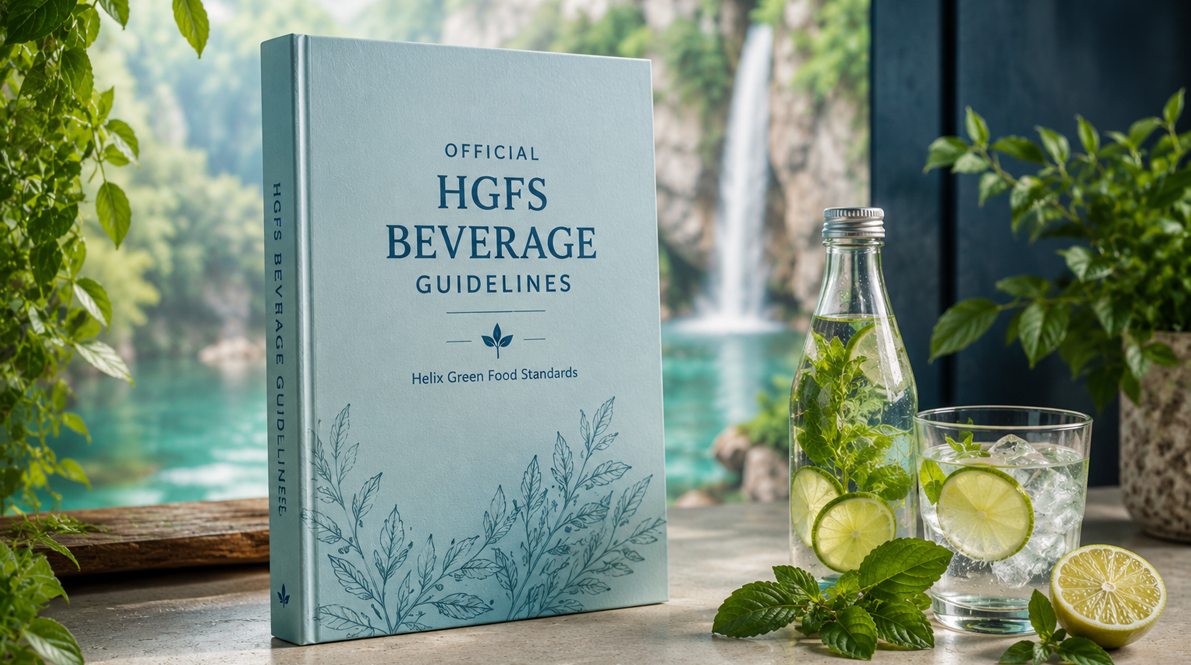

The Official HGFS Beverage Guidelines establish a comprehensive international framework for evaluating beverage products, beverage manufacturing systems, ingredient quality, nutritional responsibility, sustainability performance, consumer transparency, and operational excellence. Developed under the Helix Green Food Standards (HGFS) initiative, these guidelines provide science-based recommendations for beverage manufacturers, beverage brands, bottling facilities, beverage innovators, functional beverage developers, ingredient suppliers, retailers, and food-service organizations seeking alignment with next-generation Green Beverage principles.
The global beverage industry is undergoing significant transformation driven by changing consumer expectations, public-health concerns, environmental challenges, sustainability objectives, and technological innovation. Consumers increasingly seek beverages that support hydration, nutrition, wellness, transparency, and sustainability while maintaining safety, quality, and product integrity.
HGFS recognizes that beverages play an important role in modern food systems and public health. Beverage products influence dietary patterns, sugar consumption, hydration status, functional nutrition, consumer wellbeing, and environmental performance. Consequently, responsible beverage production requires an integrated approach that addresses ingredient selection, water quality, nutritional composition, manufacturing practices, packaging systems, distribution networks, and transparent communication.
Unlike traditional beverage standards that focus primarily on regulatory compliance or product safety, the HGFS framework adopts a multidimensional evaluation model that integrates food science, nutrition, sustainability, responsible innovation, transparency, environmental stewardship, and continuous improvement. This holistic approach reflects the growing understanding that beverage quality cannot be separated from broader social, environmental, and health-related outcomes.
The Official HGFS Beverage Guidelines support a wide range of beverage categories including bottled water, mineral water, soft drinks, juices, functional beverages, sports drinks, plant-based beverages, dairy beverages, fermented beverages, tea products, coffee products, nutritional beverages, wellness drinks, and emerging beverage technologies.
Through the HGFS framework, beverage organizations can strengthen product quality, improve consumer trust, support sustainability objectives, enhance transparency, reduce operational risks, and contribute positively to the future of healthier and more sustainable global beverage systems.
The HGFS Beverage Guidelines are founded on the principle that beverages should contribute positively to both human health and environmental sustainability. As one of the most widely consumed product categories worldwide, beverages have significant influence on public health outcomes, consumer behavior, resource utilization, packaging waste generation, and sustainability performance.
The framework evaluates beverage systems through multiple dimensions including water quality, sugar management, ingredient integrity, additive control, fermentation governance, functional nutrition, packaging sustainability, storage practices, distribution management, nutritional disclosure, and consumer transparency. This integrated approach allows organizations to evaluate beverage excellence beyond traditional quality-control metrics.
HGFS encourages beverage organizations to move beyond compliance-based management and adopt proactive systems that improve nutritional quality, reduce environmental impact, strengthen transparency, and support continuous improvement. Rather than focusing solely on product formulation, the framework evaluates the entire beverage lifecycle from ingredient sourcing and manufacturing to packaging, distribution, and consumer communication.
Responsible innovation is another important principle within the HGFS ecosystem. The beverage industry continues to evolve through advances in functional nutrition, fermentation technologies, plant-based formulations, biotechnology applications, digital traceability, and sustainable packaging systems. HGFS supports evidence-based innovation while maintaining consumer protection, transparency, and scientific integrity.
Consumer trust remains central to the HGFS philosophy. Modern consumers increasingly seek accurate information regarding ingredients, sugar content, functional claims, sustainability performance, nutritional value, and product origins. The framework therefore promotes transparent communication practices that help consumers make informed purchasing decisions.
Through science-based evaluation, sustainability leadership, transparency, and continuous improvement, the HGFS Beverage Guidelines support the development of healthier, safer, and more responsible beverage systems capable of meeting future global challenges.
The Official HGFS Beverage Guidelines evaluate beverage products and manufacturing systems across the complete beverage lifecycle, from source water management and ingredient selection to packaging sustainability, nutritional transparency, and Green Stars certification.
Water Quality Assessment and Monitoring
Sugar Management and Reduction Strategies
Artificial Additives Evaluation
Natural Ingredient Integrity Standards
Fermentation Governance and Safety Controls
Functional Beverage Development
Sustainable Packaging Solutions
Storage and Distribution Management
Nutritional Disclosure and Transparency
HGFS Beverage Green Stars Rating System
Water is the most fundamental component of nearly every beverage category and serves as the foundation of product safety, quality, consistency, and consumer trust. Whether used in bottled water, juices, carbonated beverages, functional drinks, sports beverages, dairy beverages, plant-based drinks, coffee products, tea products, or fermented beverages, water quality directly influences the overall integrity of the final product. For this reason, the HGFS Beverage Guidelines place Water Quality at the core of responsible beverage production.
Modern consumers often associate beverage quality with flavor, appearance, branding, and nutritional claims. However, the scientific foundation of beverage quality begins with source water management. The chemical composition, microbiological profile, mineral balance, pH characteristics, and contaminant status of water can significantly influence manufacturing performance, ingredient stability, sensory attributes, and shelf-life outcomes.
HGFS encourages beverage organizations to establish comprehensive water management systems capable of protecting source water integrity, monitoring water quality, preventing contamination, and supporting long-term sustainability objectives. Water should be evaluated using scientifically validated testing protocols covering microbiological, chemical, and physical quality parameters. Monitoring systems should be documented, regularly reviewed, and integrated into broader quality-management frameworks.
Microbiological safety remains one of the most critical priorities within beverage production. Bacteria, yeasts, molds, viruses, protozoa, and other microbial contaminants may compromise product safety, reduce shelf stability, and undermine consumer confidence. Organizations are therefore encouraged to implement preventive controls including filtration technologies, disinfection systems, sanitation programs, infrastructure maintenance, and environmental monitoring procedures designed to minimize contamination risks.
Water chemistry also plays a crucial role in beverage formulation. Mineral content, hardness levels, alkalinity, conductivity, dissolved solids, and pH characteristics can influence ingredient interactions, carbonation efficiency, flavor profiles, fermentation performance, and product consistency. Understanding and controlling these variables allows organizations to maintain product quality while reducing operational variability.
The framework further emphasizes contaminant prevention and source protection. Beverage organizations should establish systems capable of identifying and managing potential risks associated with heavy metals, pesticide residues, industrial pollutants, pharmaceutical contaminants, agricultural runoff, and emerging environmental contaminants. Preventive management helps protect both consumer health and organizational reputation.
Advanced treatment technologies such as reverse osmosis, activated carbon filtration, membrane filtration, ultraviolet disinfection, ozonation, and mineral balancing systems may contribute to improved water quality when appropriately validated and maintained. However, treatment technologies should complement—not replace—responsible source-water management and risk-prevention strategies.
Water stewardship represents another important dimension of HGFS philosophy. Beverage production depends heavily on sustainable access to clean water resources. Organizations are encouraged to implement water conservation programs, wastewater management systems, recycling initiatives, and efficiency improvements that support long-term environmental sustainability and resource resilience.
As global water challenges continue to intensify due to climate change, urbanization, population growth, and environmental pressures, responsible water governance becomes increasingly important. Through science-based monitoring, contamination prevention, sustainable management, and continuous improvement, organizations can strengthen both product quality and environmental performance.
Within the HGFS ecosystem, water quality is not viewed simply as a regulatory requirement. It is recognized as a strategic pillar of beverage excellence, sustainability leadership, consumer trust, and long-term business resilience.
Sugar consumption has become one of the most significant public-health challenges facing modern food systems. Excessive intake of added sugars has been associated with obesity, type 2 diabetes, cardiovascular disease, metabolic disorders, dental health concerns, and numerous other chronic health conditions. Because beverages represent one of the largest sources of added sugars in many populations, responsible sugar management has become a critical component of beverage sustainability and public-health leadership.
The HGFS Beverage Guidelines encourage organizations to adopt evidence-based approaches to sugar management that balance consumer preferences, product functionality, nutritional responsibility, and operational feasibility. Rather than promoting simplistic solutions, the framework supports continuous improvement through transparent formulation strategies, responsible product development, and measurable sugar-reduction initiatives.
Added sugars may contribute desirable sensory characteristics, mouthfeel, preservation effects, fermentation support, and consumer acceptance. However, excessive reliance on added sugars may undermine nutritional quality and conflict with evolving public-health objectives. Beverage manufacturers are therefore encouraged to evaluate opportunities for gradual sugar reduction while maintaining product safety, quality, and customer satisfaction.
HGFS recognizes that sugar management strategies vary across beverage categories. Bottled water, functional beverages, sports drinks, plant-based beverages, fermented beverages, dairy beverages, juices, and carbonated products each present unique formulation challenges. Consequently, sugar evaluation should consider product category, intended use, nutritional purpose, consumer expectations, and scientific evidence.
The framework encourages organizations to establish internal sugar-management policies, monitor formulation trends, evaluate consumer demand for lower-sugar alternatives, and explore responsible innovation opportunities. Product reformulation initiatives should be supported by scientific validation and transparent communication practices.
Alternative sweetening systems may play a role in sugar-reduction strategies when supported by safety assessments, regulatory compliance, scientific evidence, and transparent labeling. Organizations should carefully evaluate ingredient functionality, consumer expectations, nutritional implications, and long-term sustainability considerations when selecting sweetening solutions.
Consumer education is another important component of responsible sugar management. Transparent nutritional disclosure helps consumers understand product composition and make informed purchasing decisions. Clear communication regarding sugar content, serving sizes, sweetener sources, and nutritional characteristics contributes to stronger consumer trust and accountability.
HGFS discourages misleading health claims, hidden sugar sources, and communication practices that may obscure the true nutritional characteristics of beverage products. Transparency and scientific integrity should remain central principles throughout product development and marketing activities.
Through responsible formulation, evidence-based innovation, nutritional transparency, and continuous improvement, beverage organizations can contribute positively to public health while maintaining product quality and commercial success.
Within the HGFS framework, sugar management represents not only a nutritional consideration but also a broader commitment to responsible beverage leadership and long-term consumer wellbeing.
Artificial additives have played an important role in the development of modern beverage systems by supporting product stability, flavor consistency, shelf-life management, color enhancement, texture modification, and manufacturing efficiency. However, increasing consumer awareness, evolving scientific research, and growing demand for clean-label products have created greater expectations regarding the responsible use of additives within beverage formulations.
The HGFS Beverage Guidelines encourage beverage organizations to adopt a science-based and transparent approach toward additive management. The framework neither automatically prohibits nor automatically endorses artificial additives. Instead, ingredients are evaluated through the lenses of safety, scientific evidence, functionality, transparency, regulatory compliance, consumer understanding, and overall product integrity.
Many additives perform essential technological functions that help maintain product safety and quality. Preservatives may reduce microbial risks, stabilizers can improve consistency, acidity regulators help maintain formulation stability, and certain processing aids support manufacturing efficiency. When appropriately selected and properly managed, these ingredients may contribute positively to beverage performance and consumer protection.
At the same time, HGFS recognizes growing consumer interest in simpler ingredient declarations and cleaner formulations. Beverage organizations are encouraged to continuously review additive usage, evaluate opportunities for ingredient simplification, and explore alternatives that maintain product performance while improving transparency and consumer confidence.
The framework supports the principle of technological necessity. Additives should be used because they serve a clearly defined and scientifically justified purpose rather than simply because they are available or traditionally utilized. Organizations are encouraged to periodically reassess formulations to determine whether specific additives remain necessary under current production conditions.
Transparency remains a central requirement. Consumers should be able to understand ingredient declarations without unnecessary complexity or ambiguity. Clear labeling, accurate disclosure, and accessible information help strengthen trust while supporting informed purchasing decisions.
Artificial colors, flavor enhancers, preservatives, sweeteners, stabilizers, emulsifiers, and other functional additives should be evaluated not only for regulatory compliance but also for alignment with broader organizational commitments related to transparency, consumer wellbeing, and product quality.
HGFS additionally encourages organizations to monitor emerging scientific literature, regulatory developments, and consumer trends related to additive safety and formulation innovation. Continuous review allows manufacturers to remain responsive to evolving expectations while maintaining operational effectiveness.
Risk assessment, supplier verification, ingredient traceability, quality assurance systems, and documentation controls should support all additive management activities. These measures help ensure consistency, accountability, and ongoing compliance throughout the beverage production process.
Within the HGFS philosophy, responsible additive management is viewed as a balance between technological functionality, scientific integrity, transparency, consumer trust, and continuous product improvement.
Natural ingredients have become one of the most influential drivers of innovation within the global beverage industry. Consumers increasingly seek products that contain recognizable ingredients, simplified formulations, transparent sourcing practices, and closer connections to traditional food systems. The HGFS Beverage Guidelines recognize natural ingredient integrity as a key component of beverage quality, consumer confidence, and responsible product development.
Natural ingredients may include fruits, vegetables, herbs, spices, botanical extracts, plant-derived compounds, naturally occurring minerals, fermentation-derived ingredients, dairy components, and other materials obtained through processes that preserve their essential characteristics. However, the term “natural” is often interpreted differently across markets and regulatory environments. For this reason, HGFS encourages organizations to support natural claims with transparency, scientific accuracy, and appropriate documentation.
Ingredient integrity begins with responsible sourcing. Beverage manufacturers are encouraged to establish supplier verification systems capable of evaluating quality, traceability, sustainability performance, agricultural practices, and compliance with applicable standards. Strong sourcing programs contribute to both product quality and long-term supply chain resilience.
The framework supports the use of minimally processed ingredients whenever feasible and appropriate for product objectives. Preserving the inherent qualities of ingredients may contribute to flavor authenticity, nutritional value, consumer acceptance, and market differentiation. At the same time, organizations should balance natural ingredient goals with food safety requirements, product stability considerations, and operational practicality.
Natural ingredients may also contribute to nutritional enhancement and functional beverage innovation. Fruits, botanical extracts, plant compounds, probiotics, prebiotics, fermentation-derived substances, and naturally occurring bioactive compounds are increasingly utilized within beverage systems to support specific product objectives. Any functional positioning should be supported by scientific evidence and communicated responsibly.
Transparency regarding ingredient origins is strongly encouraged. Consumers increasingly seek information regarding where ingredients are sourced, how they are produced, and whether sustainability principles have been considered throughout the supply chain. Digital traceability tools and QR-based information systems may support enhanced transparency and consumer engagement.
The framework discourages misleading natural claims that may create unrealistic consumer expectations. Marketing communications should accurately reflect ingredient composition, processing methods, and product characteristics. Transparency and honesty remain essential components of responsible consumer communication.
Biodiversity protection and sustainable agriculture are also important considerations when sourcing natural ingredients. Organizations are encouraged to evaluate opportunities for supporting responsible farming systems, regenerative agriculture initiatives, sustainable harvesting practices, and environmental stewardship programs that contribute to long-term ecological resilience.
As consumer demand for natural products continues to grow, beverage organizations must balance authenticity, scientific rigor, sustainability, quality assurance, and regulatory compliance. Effective management of natural ingredients requires coordination across sourcing, manufacturing, quality control, marketing, and sustainability functions.
Within the HGFS Beverage Guidelines, natural ingredients are viewed not merely as marketing attributes but as strategic components of beverage integrity, transparency, sustainability, innovation, and consumer trust.
Fermentation represents one of the oldest and most scientifically significant food technologies in human history. Across cultures and civilizations, fermented beverages have played important roles in nutrition, preservation, flavor development, microbial stability, and health promotion. The HGFS Beverage Guidelines recognize fermentation as both a traditional practice and a modern scientific discipline capable of supporting innovation, sustainability, and functional beverage development.
Modern fermented beverage systems include a wide range of products such as kombucha, kefir beverages, cultured dairy drinks, fermented plant-based beverages, probiotic beverages, traditional fermented drinks, and emerging microbiome-supportive formulations. As consumer interest in gut health and functional nutrition continues to grow, fermentation technologies are becoming increasingly important within the global beverage industry.
The HGFS framework encourages beverage organizations to establish scientifically controlled fermentation processes that prioritize safety, consistency, transparency, and product integrity. Fermentation systems should be supported by documented procedures, microbial management protocols, environmental controls, quality assurance measures, and continuous monitoring activities capable of ensuring stable production outcomes.
Microbial culture management is one of the most important aspects of responsible fermentation governance. Beverage manufacturers should maintain appropriate controls regarding starter cultures, microbial strain selection, culture preservation, contamination prevention, propagation procedures, and process verification. Effective microbial management contributes to product consistency while reducing risks associated with unwanted microbial growth.
The framework emphasizes contamination prevention throughout the fermentation lifecycle. Facilities should implement sanitation programs, environmental monitoring systems, equipment maintenance procedures, and quality-control measures designed to minimize microbiological risks. Because fermentation intentionally involves microbial activity, maintaining distinction between beneficial cultures and undesirable contamination is particularly important.
Fermentation parameters including temperature, pH, oxygen exposure, fermentation duration, nutrient availability, and microbial activity should be monitored and controlled to support product quality and safety. Variability in fermentation conditions may significantly influence flavor development, nutritional composition, microbial viability, and shelf-life performance.
Transparency remains a central principle within the HGFS fermentation framework. Consumers increasingly seek information regarding fermentation methods, culture types, probiotic content, ingredient origins, and product functionality. Organizations are encouraged to communicate fermentation-related information clearly and accurately while avoiding unsupported health claims or misleading representations.
The framework also recognizes the growing scientific interest in probiotics, postbiotics, microbial metabolites, and microbiome-supportive products. Any claims relating to digestive health, immune function, microbiome support, or physiological benefits should be supported by credible scientific evidence and communicated responsibly in accordance with applicable regulations.
Sustainability considerations may also influence fermentation practices. Fermentation technologies can contribute to resource efficiency, ingredient utilization, shelf-life extension, and innovation opportunities that support more sustainable beverage systems. Organizations are encouraged to explore these benefits while maintaining strong governance and scientific accountability.
Within the HGFS Beverage Guidelines, fermentation is viewed as a convergence of tradition, science, innovation, nutrition, and sustainability. Responsible fermentation management supports product quality, consumer trust, scientific integrity, and the continued evolution of advanced beverage systems.
Functional beverages represent one of the fastest-growing segments of the global food and beverage industry. Consumers increasingly seek products that provide benefits extending beyond basic hydration and enjoyment, including support for nutrition, energy metabolism, cognitive performance, digestive health, immune function, recovery, stress management, and overall wellbeing. The HGFS Beverage Guidelines establish a science-based framework for evaluating functional beverage development, formulation integrity, transparency, and responsible innovation.
The framework recognizes that functional beverages may contain a wide range of ingredients including vitamins, minerals, amino acids, botanical extracts, probiotics, prebiotics, fiber sources, protein systems, electrolytes, bioactive compounds, fermentation-derived ingredients, and other substances intended to support specific nutritional or physiological objectives. However, functionality should always be supported by scientific evidence, product quality controls, and transparent communication.
Responsible product development begins with a clear understanding of intended functionality. Organizations are encouraged to define product objectives, identify relevant scientific evidence, evaluate ingredient interactions, assess safety considerations, and establish quality-management systems capable of supporting consistent product performance. Functional positioning should be grounded in evidence rather than marketing trends alone.
Scientific substantiation is one of the most important principles within the HGFS functional beverage framework. Claims relating to health benefits, physiological effects, performance enhancement, digestive support, immune function, cognitive performance, or wellness outcomes should be supported by credible scientific literature, appropriate formulation design, and regulatory compliance. Unsupported or exaggerated claims may undermine consumer trust and damage industry credibility.
The framework also encourages transparency regarding active ingredients, functional components, serving sizes, usage recommendations, and relevant nutritional information. Consumers should be able to understand what functional ingredients are present, why they are included, and how they contribute to the intended purpose of the product.
Safety remains a critical consideration in functional beverage development. Organizations should evaluate ingredient safety profiles, dosage considerations, target populations, potential interactions, and quality-control requirements throughout product development and commercialization processes. Special attention may be warranted for products targeting vulnerable populations or containing concentrated bioactive compounds.
Innovation is strongly supported within the HGFS ecosystem. Advances in nutritional science, biotechnology, fermentation technologies, ingredient discovery, personalized nutrition, and digital health are creating new opportunities for functional beverage development. The framework encourages responsible innovation that balances scientific rigor, consumer protection, sustainability, and market needs.
Sustainability considerations should also be integrated into functional beverage systems. Ingredient sourcing, manufacturing practices, packaging choices, transportation activities, and resource utilization may all influence the environmental footprint of functional products. Organizations are encouraged to align innovation strategies with broader sustainability objectives whenever feasible.
Consumer education plays an important role in the success of functional beverages. Clear communication regarding intended use, product limitations, scientific evidence, and responsible consumption practices helps consumers make informed decisions while strengthening transparency and trust.
Within the HGFS Beverage Guidelines, functional beverages are viewed as an important intersection between nutrition science, responsible innovation, consumer wellbeing, and sustainable product development. Organizations that successfully integrate these principles contribute to the advancement of healthier and more evidence-based beverage ecosystems.
Packaging plays a critical role in beverage safety, product preservation, transportation efficiency, consumer convenience, and brand communication. However, packaging also represents one of the most significant environmental challenges facing the global beverage industry. The HGFS Beverage Guidelines therefore promote a comprehensive approach to packaging sustainability that balances product protection with environmental responsibility and circular economy principles.
Modern beverage packaging systems must fulfill multiple functions simultaneously. Packaging protects products from contamination, preserves quality throughout storage and distribution, communicates essential information to consumers, and supports efficient logistics operations. At the same time, organizations face increasing expectations to reduce packaging waste, improve recyclability, minimize resource consumption, and reduce lifecycle environmental impacts.
The framework encourages beverage organizations to evaluate packaging materials based on functionality, safety, environmental performance, recyclability, reusability, resource efficiency, and end-of-life management considerations. Sustainable packaging should not compromise product safety, product quality, shelf stability, or consumer protection.
Material selection is an important component of packaging sustainability. Beverage organizations are encouraged to assess opportunities for reducing virgin material consumption, increasing recycled content, supporting recyclable packaging systems, and exploring innovative alternatives that align with operational requirements and environmental objectives.
The framework also supports circular economy principles that seek to maintain materials within productive use cycles for as long as possible. Recycling initiatives, reusable packaging models, closed-loop systems, recovery programs, and material efficiency improvements may contribute to stronger sustainability performance and reduced environmental burden.
Packaging design should consider the entire product lifecycle. Organizations are encouraged to evaluate transportation efficiency, material optimization, packaging weight reduction, storage requirements, consumer usability, and waste-management implications when developing packaging strategies.
Consumer communication remains an important component of packaging sustainability. Clear recycling instructions, disposal guidance, material identification systems, and environmental information can help consumers participate more effectively in responsible waste-management practices.
Emerging technologies such as smart packaging, digital traceability systems, QR verification tools, and interactive consumer-information platforms may provide additional opportunities to strengthen transparency, improve supply-chain visibility, and enhance sustainability performance.
The framework also encourages organizations to establish measurable packaging objectives, monitor environmental indicators, evaluate supplier performance, and implement continuous improvement programs that support long-term sustainability goals.
Within the HGFS Beverage Guidelines, sustainable packaging is viewed as a strategic opportunity to protect products, reduce environmental impacts, strengthen consumer trust, and contribute to more circular and resilient beverage systems.
Storage and distribution activities play a critical role in maintaining beverage quality, protecting product safety, preserving nutritional characteristics, and ensuring that products reach consumers in optimal condition. The HGFS Beverage Guidelines establish principles for responsible storage management, transportation governance, distribution efficiency, traceability, and supply-chain integrity throughout the beverage lifecycle.
Beverage products may be exposed to numerous environmental conditions during storage and transportation, including temperature fluctuations, humidity variations, light exposure, physical handling stresses, and extended holding periods. Without effective controls, these factors may negatively affect product quality, safety, flavor stability, packaging integrity, and shelf-life performance.
Organizations are encouraged to establish documented storage procedures that address temperature management, inventory control, stock rotation, warehouse hygiene, pest prevention, environmental monitoring, and product segregation where appropriate. Effective storage systems help reduce product losses while maintaining consistent quality standards.
Cold-chain management is particularly important for temperature-sensitive beverage categories such as dairy beverages, probiotic products, fermented drinks, certain functional beverages, and other products requiring controlled environmental conditions. Organizations should implement monitoring systems capable of maintaining appropriate storage and transportation temperatures throughout the distribution network.
Inventory management practices such as First-In-First-Out (FIFO), batch tracking, expiration monitoring, and digital inventory systems can improve operational efficiency while reducing spoilage and unnecessary waste. These systems also support traceability and product-recall readiness when necessary.
Transportation sustainability is another important consideration within the framework. Beverage organizations are encouraged to evaluate route efficiency, vehicle utilization, logistics optimization, packaging protection, fuel consumption, and greenhouse-gas impacts associated with distribution activities.
Traceability systems should support visibility throughout the supply chain. Organizations are encouraged to maintain records capable of tracking product movement, storage conditions, batch information, transportation activities, and delivery performance. Enhanced traceability contributes to both consumer trust and operational resilience.
Risk management plays a central role in storage and distribution governance. Organizations should identify potential risks associated with transportation disruptions, temperature excursions, infrastructure failures, contamination events, supplier interruptions, and environmental conditions that may affect product integrity.
Digital technologies including warehouse-management systems, transportation-management platforms, environmental monitoring devices, GPS tracking systems, and data analytics tools may improve visibility, efficiency, and decision-making across distribution operations.
Within the HGFS Beverage Guidelines, storage and distribution are viewed as essential extensions of product quality management. Effective systems help protect consumer interests, improve sustainability performance, strengthen supply-chain resilience, and support long-term operational excellence.
Transparency is one of the defining characteristics of responsible beverage systems. Consumers increasingly expect access to accurate, understandable, and meaningful information regarding the nutritional composition, ingredients, functionality, and health-related characteristics of the beverages they consume. The HGFS Beverage Guidelines therefore establish Nutritional Disclosure as a core pillar of consumer trust and informed decision-making.
Nutritional disclosure extends beyond regulatory compliance. While mandatory labeling requirements remain important, HGFS encourages beverage organizations to adopt enhanced transparency practices that provide consumers with clear insights into product composition, nutritional value, ingredient sources, and functional characteristics.
Organizations are encouraged to provide accurate information regarding calories, serving sizes, sugars, carbohydrates, proteins, fats, sodium content, vitamins, minerals, and other relevant nutritional indicators. Information should be presented clearly and consistently to support consumer understanding and comparison between products.
The framework places particular emphasis on transparency regarding added sugars and sweetening systems. Consumers should be able to identify sugar content, understand serving-size implications, and distinguish between naturally occurring sugars and added sweeteners when relevant. Clear disclosure supports informed purchasing decisions and responsible consumption practices.
Ingredient transparency is equally important. Consumers increasingly seek information regarding natural ingredients, botanical extracts, functional compounds, probiotics, caffeine sources, preservatives, colorants, flavorings, and other formulation components. Accurate ingredient declarations strengthen confidence while reducing the potential for misunderstanding.
Functional beverage claims should be supported by scientific evidence and communicated responsibly. Organizations should avoid exaggerated, misleading, or unsubstantiated claims that may create unrealistic expectations regarding product performance or health outcomes.
Allergen communication, dietary suitability information, and special product characteristics may also contribute to enhanced consumer transparency. Information related to vegan status, vegetarian suitability, gluten considerations, allergen content, and other relevant attributes should be communicated clearly when applicable.
Digital disclosure technologies are becoming increasingly important within modern beverage systems. QR codes, interactive labeling platforms, traceability tools, and digital product-information systems can provide consumers with access to expanded information beyond traditional packaging limitations.
The framework encourages organizations to maintain documentation supporting all public-facing claims and disclosures. Transparency should be grounded in verifiable information, scientific integrity, and responsible communication practices.
Within the HGFS philosophy, nutritional disclosure is more than a labeling exercise. It is a commitment to transparency, accountability, consumer empowerment, and long-term trust between beverage organizations and the communities they serve.
The HGFS Beverage Green Stars Rating System serves as the official recognition and performance evaluation framework for beverage organizations participating in the Helix Green Food Standards ecosystem. Rather than relying solely on a pass-or-fail certification model, the Green Stars system recognizes progressive achievement and continuous improvement across multiple dimensions of beverage excellence, sustainability, transparency, nutritional responsibility, and operational maturity.
Modern beverage systems are increasingly evaluated not only on product quality and regulatory compliance but also on their broader contributions to public health, environmental stewardship, responsible innovation, supply chain integrity, and consumer trust. The HGFS Green Stars framework was developed to provide a more comprehensive and meaningful assessment methodology capable of reflecting these evolving expectations.
The rating system evaluates organizations across a range of performance categories including water quality management, sugar reduction initiatives, ingredient integrity, additive governance, functional beverage development, packaging sustainability, storage and distribution performance, nutritional transparency, sustainability management, consumer communication, and continuous improvement practices.
Organizations are assessed through documented evidence, operational practices, management systems, performance indicators, transparency mechanisms, and measurable improvement initiatives. The resulting Green Stars classification provides stakeholders with a clear representation of an organization's commitment to responsible beverage production and sustainable business practices.
The Green Stars framework is designed to encourage long-term development rather than one-time compliance. Organizations are encouraged to continuously strengthen their systems, improve performance metrics, enhance transparency, and pursue higher levels of operational excellence over time.
Through this progressive recognition model, HGFS seeks to support the development of healthier, safer, more transparent, and more sustainable beverage systems capable of meeting future consumer expectations and global sustainability challenges.
The HGFS Beverage Guidelines are an international framework developed by Helix Green Food Standards (HGFS) to evaluate beverage products and beverage systems through sustainability, nutrition, transparency, quality management, and responsible innovation principles.
Certification may be applicable to beverage manufacturers, bottling facilities, beverage startups, ingredient suppliers, co-packers, beverage brands, functional beverage developers, and related organizations operating within the beverage sector.
Yes. Water quality is one of the core pillars of the framework and includes source-water management, microbiological safety, contaminant control, water chemistry evaluation, and water stewardship practices.
Yes. The framework encourages evidence-based sugar-management strategies, transparent nutritional disclosure, responsible formulation practices, and continuous improvement in beverage nutrition.
No. HGFS adopts a science-based approach that evaluates additives based on safety, transparency, functionality, regulatory compliance, and overall product integrity rather than automatic acceptance or rejection.
No. HGFS adopts a science-based approach that evaluates additives based on safety, transparency, functionality, regulatory compliance, and overall product integrity rather than automatic acceptance or rejection.
Functional beverages are products formulated to provide benefits beyond basic hydration through ingredients such as vitamins, minerals, probiotics, botanical extracts, amino acids, and other scientifically supported components.
Yes. Sustainable packaging, recyclability, resource efficiency, circular economy principles, and environmental performance are all considered within the framework.
The Green Stars Rating System is a progressive recognition model that awards organizations from One Star to Five Stars based on sustainability performance, transparency, product quality, and operational excellence.
Yes. The framework is designed to be scalable and applicable to organizations ranging from startups and regional producers to multinational beverage corporations.
Yes. Fermentation governance, microbial safety, probiotic management, process control, and transparency are important elements of the framework.
HGFS promotes continual improvement through regular performance monitoring, objective setting, corrective actions, innovation initiatives, and sustainability advancement programs.


The complete Official HGFS Beverage Guidelines provide detailed requirements, implementation recommendations, scientific principles, sustainability frameworks, Green Stars Rating methodology, and certification guidance for beverage organizations seeking alignment with Helix Green Food Standards.
Organizations interested in implementing the framework are encouraged to review the complete guideline document and evaluate opportunities for integration within existing quality, sustainability, and operational management systems.