Address
Texas, United States

 Official HGFS Guidelines 2026 Released for Global Food Sustainability

support@helixgreen.org
HGFS (Helix Green Food Standard) is a science-based sustainability and food certification framework developed to support healthier, safer, and environmentally responsible food systems worldwide. HGFS provides international standards for restaurants, food brands, agriculture, beverages, and sustainable packaging operations.
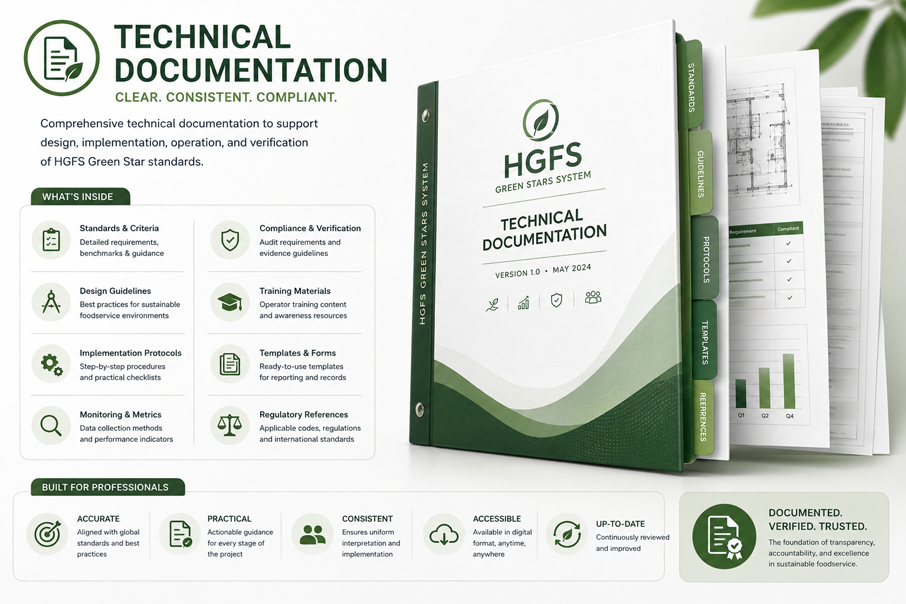

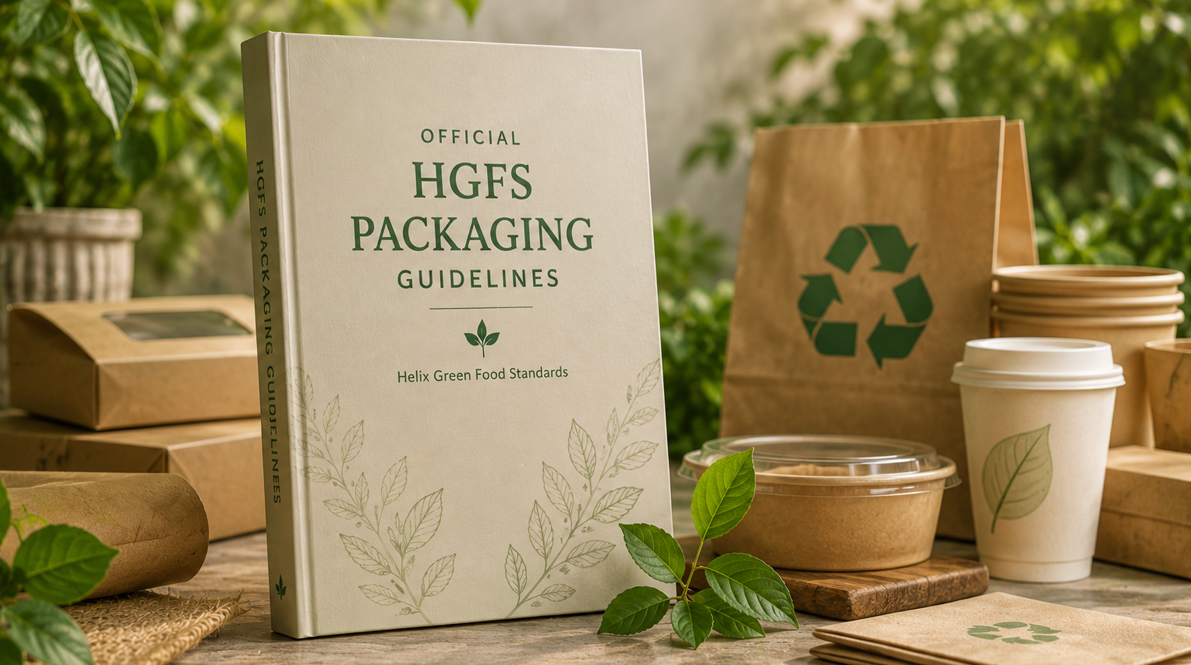

The Official HGFS Packaging Guidelines establish a comprehensive international framework for sustainable packaging governance across food, beverage, nutraceutical, hospitality, retail, logistics, and consumer-product industries. Developed under the Helix Green Food Standards (HGFS) ecosystem, these guidelines provide organizations with a science-based pathway toward safer, more sustainable, more transparent, and environmentally responsible packaging systems.
Packaging plays a critical role in modern food systems. Beyond protecting products during manufacturing, storage, transportation, and distribution, packaging directly influences food safety, shelf-life stability, consumer trust, sustainability performance, waste generation, and climate impact. As global concerns regarding plastic pollution, carbon emissions, circular economy development, and resource depletion continue to grow, packaging has emerged as one of the most important sustainability challenges facing modern industries.
The HGFS Packaging Guidelines recognize that responsible packaging must achieve multiple objectives simultaneously. Effective packaging systems should protect product quality, preserve consumer safety, support operational efficiency, enable traceability, reduce environmental impact, facilitate circular resource flows, and strengthen long-term sustainability performance throughout the supply chain.
Unlike traditional packaging standards that focus primarily on regulatory compliance or material specifications, the HGFS framework adopts a systems-thinking approach. Packaging is evaluated across its entire lifecycle, including raw-material sourcing, manufacturing processes, transportation systems, consumer use, recycling infrastructure, waste-management pathways, and environmental outcomes.
The framework promotes the integration of sustainable materials, plastic reduction strategies, recyclability optimization, compostable packaging systems, food-contact safety controls, smart packaging technologies, transparent labeling, environmental-footprint management, and circular economy principles into a unified sustainability governance model.
Organizations implementing the HGFS Packaging Guidelines are encouraged to continuously improve resource efficiency, reduce unnecessary packaging, minimize environmental burden, strengthen consumer communication, improve material traceability, and support measurable sustainability outcomes. The guidelines emphasize evidence-based decision-making supported by scientific research, lifecycle analysis, environmental accountability, and continuous innovation.
Consumer expectations regarding packaging continue to evolve. Modern consumers increasingly demand transparency, sustainability, food safety, recyclability, ethical sourcing, and environmental responsibility. The HGFS Packaging Guidelines provide organizations with a structured framework to address these expectations while maintaining product integrity and operational excellence.
The framework also supports emerging global sustainability priorities including ESG integration, circular economy development, climate-responsible operations, resource stewardship, waste reduction, and environmental resilience. Through these principles, packaging becomes more than a protective container—it becomes an active contributor to healthier products, more sustainable supply chains, and a more resilient global economy.
The HGFS Packaging Guidelines are designed for organizations of all sizes, including manufacturers, food producers, beverage companies, packaging suppliers, retailers, hospitality organizations, logistics providers, sustainability-focused enterprises, and innovative packaging developers seeking internationally aligned sustainability recognition.
Ultimately, the HGFS Packaging Guidelines represent a commitment to balancing consumer protection, scientific integrity, environmental stewardship, circular economy principles, and long-term sustainability performance. Through responsible packaging governance, organizations can contribute to healthier ecosystems, reduced environmental impact, stronger consumer trust, and a more sustainable future for global food and consumer-product systems.
The Official HGFS Packaging Guidelines were developed to address one of the most significant sustainability challenges facing modern industries: the environmental, social, and economic impacts of packaging systems. Packaging is present throughout nearly every stage of the global economy, from food production and beverage manufacturing to pharmaceuticals, e-commerce, hospitality, retail, agriculture, and logistics. While packaging provides essential protection and functionality, it also contributes substantially to resource consumption, waste generation, greenhouse-gas emissions, and environmental pollution.
Historically, packaging systems were designed primarily to protect products, improve transportation efficiency, and extend shelf life. Although these objectives remain important, modern sustainability challenges require a broader perspective. Organizations are increasingly expected to consider the full lifecycle impacts of packaging materials, manufacturing processes, distribution systems, consumer use patterns, and end-of-life recovery pathways.
The HGFS Packaging Guidelines were created to support this transition by providing a comprehensive framework that integrates sustainability, food safety, circular economy principles, environmental responsibility, and technological innovation into packaging governance systems.
At the core of the HGFS philosophy is the belief that packaging should simultaneously protect products, consumers, resources, and ecosystems. Sustainable packaging is not simply about replacing one material with another. True sustainability requires lifecycle thinking, evidence-based environmental assessment, responsible material sourcing, waste prevention, circularity planning, and continuous performance improvement.
The framework recognizes that packaging decisions influence a wide range of environmental and operational outcomes. Material selection affects carbon emissions, resource consumption, transportation efficiency, recyclability, food safety, waste-management systems, and consumer behavior. As a result, packaging sustainability must be managed strategically through measurable governance systems rather than isolated environmental initiatives.
The HGFS Packaging Guidelines also recognize the growing importance of transparency and traceability within global supply chains. Consumers, regulators, investors, and business partners increasingly expect organizations to demonstrate accountability regarding packaging materials, environmental claims, sustainability performance, and circular economy commitments. Enhanced transparency helps strengthen consumer confidence while supporting more responsible decision-making across supply chains.
Innovation is another central pillar of the HGFS framework. Emerging technologies including smart packaging systems, digital traceability platforms, intelligent labeling, AI-assisted lifecycle optimization, and advanced material engineering are rapidly transforming the packaging sector. The guidelines encourage responsible adoption of innovation while maintaining strong commitments to consumer protection, environmental stewardship, and scientific integrity.
The framework further supports global sustainability objectives including climate mitigation, resource conservation, waste reduction, biodiversity protection, circular economy development, and ESG performance improvement. Packaging organizations implementing HGFS standards are encouraged to align operational decisions with broader environmental and societal goals while maintaining economic viability and product performance.
Through the integration of sustainability science, food safety principles, packaging engineering, environmental governance, and responsible innovation, the HGFS Packaging Guidelines provide a practical roadmap for organizations seeking to build safer, smarter, more circular, and more resilient packaging systems.
The Official HGFS Packaging Guidelines are organized into a comprehensive framework covering the entire packaging lifecycle. The standard evaluates organizations across sustainable materials, plastic reduction, recyclability, compostability, food safety, smart packaging technologies, environmental impact, circular economy integration, transparency, and continuous sustainability improvement.
Section 1 — Sustainable Materials
Section 2 — Plastic Reduction
Section 3 — Recyclability
Section 4 — Compostable Packaging
Section 5 — Food Safety Compliance
Section 6 — Smart Packaging
Section 7 — Labeling Standards
Section 8 — Environmental Footprint
Section 9 — Circular Economy Principles
Section 10 — HGFS Packaging Green Stars Rating System
Material selection represents one of the most important decisions within sustainable packaging systems. The environmental footprint, recyclability potential, carbon intensity, resource efficiency, durability, and end-of-life outcomes of packaging are all strongly influenced by the materials chosen during product development and packaging design. The HGFS Packaging Guidelines therefore establish Sustainable Materials as the foundation of responsible packaging governance.
Historically, packaging materials have been selected primarily based on cost, availability, performance characteristics, and manufacturing convenience. While these factors remain important, modern sustainability challenges require organizations to evaluate broader environmental and social implications associated with material production, transportation, use, and disposal.
The framework encourages organizations to prioritize materials that demonstrate lower environmental impact, improved resource efficiency, responsible sourcing practices, and stronger compatibility with circular economy objectives. Sustainable material selection should balance product protection requirements with long-term environmental stewardship and operational feasibility.
Renewable materials may provide opportunities to reduce dependence on finite resources when sourced responsibly and managed through sustainable production systems. At the same time, organizations are encouraged to evaluate land-use impacts, biodiversity considerations, water requirements, and lifecycle performance when assessing renewable alternatives.
Recycled-content materials can also contribute significantly to sustainability goals by reducing virgin resource extraction, lowering energy consumption, and supporting circular material flows. The framework encourages organizations to explore opportunities for increasing recycled content while maintaining product safety, regulatory compliance, and performance standards.
Material traceability is another important component of sustainable packaging governance. Organizations should seek visibility into material origins, supplier practices, environmental claims, and sustainability certifications where appropriate. Enhanced traceability supports accountability while strengthening consumer confidence and supply-chain transparency.
Lifecycle thinking is central to the HGFS approach. Sustainable materials should be evaluated not only based on their production characteristics but also on transportation requirements, product protection capabilities, recyclability potential, waste-management compatibility, and overall environmental outcomes throughout their useful life.
Innovation continues to create new opportunities within sustainable material development. Advanced biomaterials, renewable polymers, fiber-based solutions, recycled composites, and next-generation packaging technologies may offer pathways toward improved sustainability performance when supported by scientific validation and responsible implementation.
Organizations are encouraged to establish measurable sustainability objectives related to material selection and continuously monitor progress through performance indicators, lifecycle assessments, supplier evaluations, and environmental reporting systems.
Within the HGFS Packaging Guidelines, sustainable materials are viewed as strategic assets capable of reducing environmental impact, supporting circular economy development, strengthening brand reputation, and contributing to a more resilient packaging ecosystem.
Plastic materials have transformed global packaging systems through their versatility, durability, lightweight properties, and cost-effectiveness. However, growing concerns regarding plastic pollution, marine debris, waste accumulation, resource consumption, and environmental persistence have increased pressure on organizations to adopt responsible plastic-management strategies. The HGFS Packaging Guidelines therefore identify Plastic Reduction as a critical sustainability objective.
Plastic reduction does not necessarily imply the complete elimination of plastics from packaging systems. Instead, the framework encourages organizations to evaluate opportunities for reducing unnecessary plastic usage, improving material efficiency, increasing recycled content, supporting responsible recovery systems, and transitioning toward lower-impact alternatives where feasible.
Organizations are encouraged to assess packaging designs to identify areas where plastic consumption can be reduced without compromising food safety, product quality, durability, or consumer protection. Packaging optimization strategies may include lightweighting, design simplification, material reduction, and elimination of unnecessary packaging components.
Single-use plastic products have become a particular focus of sustainability initiatives worldwide. The framework encourages organizations to evaluate opportunities for reusable systems, refillable models, durable packaging solutions, and circular distribution approaches capable of reducing reliance on disposable materials.
Plastic reduction strategies should be supported by lifecycle analysis rather than assumptions. In some situations, alternative materials may introduce different environmental trade-offs related to transportation emissions, water consumption, resource extraction, or waste-management challenges. Evidence-based evaluation helps ensure that sustainability improvements are genuine and measurable.
The framework encourages collaboration across supply chains, including material suppliers, packaging manufacturers, retailers, waste-management organizations, and consumers. Effective plastic reduction requires coordinated action throughout the packaging lifecycle.
Organizations are also encouraged to support responsible consumer behavior through clear disposal instructions, recycling guidance, educational initiatives, and transparency regarding packaging composition. Consumer engagement can significantly influence recovery rates and overall environmental outcomes.
Innovation plays an increasingly important role in plastic reduction. Emerging technologies, alternative materials, advanced recycling systems, reusable packaging models, and circular economy platforms may provide opportunities for significant sustainability improvements across packaging systems.
Performance monitoring remains essential. Organizations should establish measurable plastic-reduction objectives, track progress through quantitative indicators, and communicate results transparently through sustainability reporting and stakeholder engagement activities.
Within the HGFS Packaging Guidelines, plastic reduction is viewed as an important pathway toward environmental protection, resource stewardship, circular economy development, and long-term sustainability leadership.
Recyclability is one of the most important characteristics of sustainable packaging systems and serves as a key indicator of circular economy readiness. The HGFS Packaging Guidelines encourage organizations to design packaging that can be effectively collected, sorted, processed, and returned to productive use within existing or emerging recycling infrastructures.
Packaging that is technically recyclable but rarely collected or processed may provide limited environmental benefit. Therefore, the framework emphasizes practical recyclability, considering both material properties and real-world recovery systems. Organizations are encouraged to evaluate recyclability within the context of regional infrastructure, consumer behavior, and waste-management capabilities.
Design-for-recycling principles should be incorporated early in product development processes. Packaging designers are encouraged to minimize unnecessary material complexity, reduce problematic combinations of incompatible materials, and improve compatibility with established recycling streams.
Material selection, labeling systems, adhesives, inks, coatings, closures, and packaging components may all influence recyclability outcomes. Organizations should evaluate these factors collectively to maximize recovery potential and improve resource efficiency.
Consumer communication plays an important role in recycling success. Clear instructions regarding separation requirements, recycling pathways, disposal options, and material identification can improve participation rates and reduce contamination within recycling systems.
The framework also encourages organizations to support recycling innovation through collaboration with recyclers, municipalities, industry groups, and research institutions. Investments in recycling infrastructure, advanced sorting technologies, and material recovery systems may contribute to broader sustainability objectives.
Recycled-content utilization further strengthens circularity by creating demand for recovered materials and supporting economic incentives for recycling systems. Organizations are encouraged to evaluate opportunities for integrating recycled materials into packaging applications where safety and performance requirements can be maintained.
Measurement and verification are important components of recyclability governance. Organizations should establish performance indicators related to recyclability rates, recycled content, material recovery, and circular economy outcomes.
Continuous improvement remains a central principle. As recycling technologies evolve and infrastructure expands, organizations are encouraged to periodically reassess packaging systems and identify opportunities for enhanced circular performance.
Within the HGFS Packaging Guidelines, recyclability is recognized as a critical mechanism for reducing waste, conserving resources, supporting circular economies, and strengthening long-term environmental sustainability.
Compostable packaging has emerged as one of the most discussed innovations within sustainable packaging systems. As concerns regarding plastic pollution, landfill accumulation, and resource depletion continue to grow, organizations increasingly seek packaging solutions capable of supporting biological recovery pathways and circular resource management. The HGFS Packaging Guidelines recognize compostable packaging as a potentially valuable component of sustainable packaging strategies when implemented responsibly and supported by appropriate infrastructure.
Compostable packaging refers to materials specifically designed to break down under defined composting conditions into water, carbon dioxide, biomass, and other naturally occurring substances without generating persistent harmful residues. However, not all biodegradable materials are compostable, and not all compostable materials perform similarly across different environmental conditions. The framework therefore encourages organizations to rely on scientifically validated standards and verified performance claims.
The successful use of compostable packaging depends not only on material composition but also on the availability of appropriate collection, processing, and composting infrastructure. Packaging that is technically compostable may fail to deliver environmental benefits if consumers lack access to suitable composting systems or if waste-management pathways are poorly developed.
Organizations are encouraged to evaluate compostable packaging through lifecycle assessment methodologies that consider raw material sourcing, manufacturing impacts, transportation requirements, product protection capabilities, end-of-life management, and environmental outcomes. Compostability should complement broader sustainability objectives rather than serve as a standalone environmental claim.
Material sourcing remains an important consideration. Compostable materials often originate from renewable resources such as plant fibers, agricultural by-products, cellulose-based materials, starch-derived polymers, or other biologically sourced feedstocks. Organizations should evaluate the sustainability of sourcing practices, land-use impacts, biodiversity considerations, and agricultural resource requirements associated with these materials.
Clear consumer communication is essential to effective compostable packaging systems. Consumers should understand whether packaging is suitable for home composting, industrial composting, or specialized waste-management facilities. Ambiguous claims may contribute to contamination within recycling systems and reduce overall environmental performance.
The framework encourages organizations to collaborate with municipalities, waste-management providers, composting operators, and industry stakeholders to improve infrastructure readiness and public understanding. Effective compostable packaging systems require coordination across the entire value chain.
Certification and verification programs may further strengthen consumer confidence by providing independent validation of compostability claims. Organizations are encouraged to utilize recognized testing methodologies and transparent communication practices when making environmental claims related to compostability.
Innovation continues to expand opportunities within compostable packaging technologies. Advances in biomaterials, fiber engineering, barrier technologies, and renewable-material science are creating new possibilities for packaging applications that balance functionality with environmental responsibility.
Within the HGFS Packaging Guidelines, compostable packaging is viewed as one potential pathway toward circular resource management, waste reduction, and environmental stewardship when supported by scientific evidence, infrastructure readiness, and responsible implementation.
Food safety remains the highest priority within packaging systems intended for food, beverage, nutraceutical, and related consumer products. Regardless of sustainability objectives, material innovations, or environmental performance improvements, packaging must first and foremost protect consumers and preserve product integrity. The HGFS Packaging Guidelines therefore establish Food Safety Compliance as a foundational pillar of responsible packaging governance.
Packaging serves as a critical barrier between products and external environmental conditions. Effective packaging helps protect against microbiological contamination, chemical exposure, physical damage, moisture transfer, oxygen ingress, light exposure, and other factors capable of compromising product quality or consumer safety. Organizations are encouraged to implement packaging systems that maintain product integrity throughout manufacturing, storage, transportation, distribution, and consumer use.
Material selection plays a central role in food safety performance. Packaging materials intended for direct or indirect food contact should be evaluated for chemical migration risks, contaminant control, material stability, toxicological considerations, and regulatory compliance. Organizations should maintain documentation supporting the safety and suitability of packaging materials for their intended applications.
The framework encourages implementation of comprehensive quality-management systems covering supplier qualification, material verification, manufacturing controls, traceability programs, testing procedures, and corrective-action processes. Effective governance systems help reduce risks while strengthening accountability throughout the packaging supply chain.
Food-contact materials should be manufactured, handled, transported, and stored under conditions that prevent contamination and maintain product suitability. Environmental controls, sanitation procedures, pest-management programs, and personnel training contribute to maintaining consistent safety performance.
Traceability is another essential component of food safety governance. Organizations are encouraged to establish systems capable of tracking packaging materials from source to finished product, enabling rapid response in the event of quality concerns, product recalls, or safety investigations.
Emerging packaging technologies should undergo appropriate safety evaluations before implementation. Innovations involving active packaging, intelligent packaging, nanomaterials, antimicrobial systems, and smart packaging solutions should be assessed for both functionality and consumer safety implications.
Regulatory compliance remains a minimum expectation within the HGFS framework. However, organizations are encouraged to move beyond basic compliance by adopting proactive risk-management strategies, continuous monitoring systems, supplier engagement programs, and evidence-based quality-improvement initiatives.
Consumer confidence depends heavily on the safety and reliability of packaging systems. Organizations that consistently demonstrate strong food-safety governance are better positioned to strengthen trust, reduce operational risk, and support long-term brand value.
Within the HGFS Packaging Guidelines, food safety compliance is not viewed as a separate obligation from sustainability. Rather, it serves as the essential foundation upon which all responsible packaging innovation and environmental improvement efforts must be built.
Smart packaging represents one of the most rapidly evolving areas of packaging innovation and has the potential to transform how products are protected, monitored, traced, and communicated throughout global supply chains. The HGFS Packaging Guidelines recognize smart packaging as an important tool for improving transparency, food safety, consumer engagement, sustainability performance, and operational efficiency.
Traditional packaging systems primarily serve protective and containment functions. Smart packaging expands these capabilities by integrating technologies that enable information exchange, environmental monitoring, product authentication, condition tracking, traceability verification, and interactive consumer communication. These additional capabilities can create significant value across the entire packaging lifecycle.
The framework recognizes multiple categories of smart packaging technologies. Active packaging systems may interact with products or their surrounding environments to improve shelf life and quality preservation. Intelligent packaging systems may provide information regarding product condition, freshness indicators, temperature exposure, or supply-chain status. Digital packaging systems may facilitate traceability, authentication, and consumer engagement through digital interfaces.
QR codes, RFID technologies, NFC systems, digital product passports, blockchain-enabled traceability tools, sensor technologies, and interactive consumer-information platforms are examples of technologies increasingly utilized within modern packaging ecosystems. These tools can enhance transparency while supporting more informed decision-making by both organizations and consumers.
Food safety applications represent one of the most significant opportunities within smart packaging. Real-time monitoring technologies may help identify temperature excursions, storage failures, product degradation, supply-chain disruptions, or other conditions capable of affecting product quality and safety.
The framework also encourages organizations to evaluate the sustainability implications of smart packaging technologies. While digital solutions may improve traceability and efficiency, organizations should consider energy requirements, material usage, electronic components, recyclability challenges, and overall lifecycle impacts when implementing advanced packaging systems.
Consumer engagement capabilities continue to expand through smart packaging. Digital platforms can provide access to ingredient information, sustainability disclosures, traceability data, recycling instructions, certification records, nutritional information, and educational resources that support transparency and trust.
Data governance is another important consideration. Organizations utilizing digital packaging technologies should establish appropriate controls related to data quality, cybersecurity, privacy protection, information accuracy, and system reliability.
Innovation within smart packaging continues to accelerate through advances in artificial intelligence, sensor miniaturization, digital traceability, predictive analytics, and connected supply-chain technologies. Organizations are encouraged to evaluate emerging opportunities while maintaining strong commitments to consumer protection, transparency, and sustainability.
Within the HGFS Packaging Guidelines, smart packaging is viewed as a strategic enabler of safer products, more transparent supply chains, stronger consumer engagement, and more intelligent sustainability management across the packaging ecosystem.
Packaging labels serve as one of the most important communication interfaces between organizations and consumers. Labels provide essential information regarding product identity, ingredients, usage instructions, safety considerations, traceability, sustainability attributes, and regulatory compliance. The HGFS Packaging Guidelines therefore recognize labeling standards as a critical component of transparency, consumer protection, and responsible packaging governance.
Modern consumers increasingly expect packaging labels to provide accurate, accessible, and meaningful information that supports informed purchasing decisions. Beyond mandatory regulatory requirements, organizations are encouraged to adopt enhanced transparency practices that strengthen consumer confidence and improve understanding of product characteristics and sustainability performance.
Label information should be accurate, verifiable, and presented in a clear manner that minimizes confusion. Misleading environmental claims, unsupported sustainability statements, ambiguous terminology, or inaccurate representations may undermine consumer trust and create reputational risks for organizations.
The framework encourages transparency regarding packaging materials, recyclability characteristics, compostability claims, disposal instructions, sustainability certifications, and relevant environmental information. Clear communication helps consumers participate more effectively in responsible waste-management and circular economy systems.
Traceability information may also be integrated into labeling systems through batch identification, production codes, digital verification tools, QR technologies, and other mechanisms that improve visibility across supply chains. Enhanced traceability supports food safety, quality assurance, product authentication, and consumer confidence.
Digital labeling solutions are becoming increasingly important within modern packaging ecosystems. QR-enabled platforms, digital product passports, blockchain verification systems, and interactive information portals may provide consumers with access to expanded information beyond traditional packaging limitations.
The framework encourages organizations to ensure that environmental claims are supported by evidence and communicated responsibly. Claims related to recyclability, carbon neutrality, biodegradability, sustainability performance, renewable materials, and circular economy participation should be substantiated through appropriate documentation and verification mechanisms.
Accessibility should also be considered when designing labeling systems. Information should be presented in formats that support consumer understanding across different demographic groups, languages, literacy levels, and technological capabilities where feasible.
Continuous review of labeling effectiveness is encouraged. Consumer expectations, regulatory requirements, digital technologies, and sustainability priorities continue to evolve, creating opportunities for ongoing improvement and innovation in communication practices.
Within the HGFS Packaging Guidelines, labeling standards are viewed as essential tools for transparency, accountability, consumer empowerment, and responsible market communication.
Understanding and managing environmental footprint is fundamental to responsible packaging governance. Packaging systems consume resources, generate emissions, influence transportation efficiency, create waste streams, and interact with ecosystems throughout their lifecycle. The HGFS Packaging Guidelines therefore encourage organizations to adopt comprehensive approaches for evaluating, monitoring, and reducing environmental impacts associated with packaging activities.
Environmental footprint assessment extends beyond single indicators such as carbon emissions or material consumption. Effective evaluation considers a broad range of factors including greenhouse-gas emissions, energy use, water consumption, land-use impacts, resource depletion, waste generation, pollution potential, and biodiversity implications.
Lifecycle thinking is central to environmental footprint management. Organizations are encouraged to assess impacts across the entire packaging lifecycle, including raw-material extraction, manufacturing processes, transportation activities, product use, recovery systems, recycling pathways, and final disposal outcomes.
Carbon footprint management represents a particularly important area of focus. Packaging materials, production processes, transportation systems, and waste-management activities all contribute to greenhouse-gas emissions. Organizations are encouraged to identify emission hotspots, establish reduction targets, and implement strategies that support climate-responsible operations.
Resource efficiency is another key consideration. Reducing material intensity, improving manufacturing efficiency, increasing recycled-content utilization, optimizing transportation systems, and minimizing waste generation can contribute significantly to improved environmental performance.
The framework encourages organizations to utilize environmental assessment methodologies such as lifecycle assessment (LCA), carbon accounting, environmental-product declarations, sustainability reporting systems, and other evidence-based tools capable of supporting informed decision-making.
Environmental footprint reduction should be integrated into broader organizational strategies rather than treated as isolated projects. Leadership engagement, supplier collaboration, innovation initiatives, procurement policies, and performance-monitoring systems all contribute to long-term sustainability success.
Transparency regarding environmental performance is increasingly important. Consumers, investors, regulators, and business partners often seek information regarding environmental impacts, sustainability commitments, and measurable improvement outcomes. Organizations are encouraged to communicate environmental performance in a transparent and evidence-based manner.
Continuous improvement remains a fundamental principle of the HGFS approach. As technologies evolve and sustainability expectations increase, organizations should regularly reassess environmental performance and identify opportunities for further impact reduction.
Within the HGFS Packaging Guidelines, environmental footprint management is recognized as a strategic driver of sustainability leadership, climate responsibility, resource stewardship, and long-term business resilience.
The transition from linear consumption models toward circular economy systems represents one of the most important sustainability transformations of the twenty-first century. Traditional packaging systems often follow a linear pathway in which resources are extracted, manufactured, used, and ultimately discarded as waste. The HGFS Packaging Guidelines encourage organizations to move beyond this model and adopt circular approaches that maintain resources within productive use cycles for as long as possible.
Circular economy principles seek to eliminate waste, maximize resource value, support material recovery, and regenerate natural systems. Within packaging applications, this involves designing products, materials, and systems capable of supporting reuse, recycling, refurbishment, composting, remanufacturing, and other circular pathways.
The framework encourages organizations to consider circularity during the earliest stages of packaging design. Decisions regarding material selection, product architecture, labeling systems, closures, adhesives, coatings, and component integration can significantly influence the ability of packaging systems to participate effectively in circular economies.
Design-for-circularity principles emphasize durability, material compatibility, ease of separation, recyclability, reusability, and efficient resource recovery. Organizations are encouraged to identify opportunities for reducing complexity while improving end-of-life outcomes.
Reusable packaging systems may provide important opportunities for reducing resource consumption and waste generation in certain applications. Refill models, return systems, durable transport packaging, and closed-loop distribution systems may contribute to stronger circular performance when supported by appropriate infrastructure and operational controls.
Material recovery and recycling remain central components of circular economy development. Organizations are encouraged to collaborate with recyclers, municipalities, waste-management providers, retailers, consumers, and industry partners to strengthen collection systems, improve recovery rates, and expand circular-material flows.
Digital technologies are increasingly supporting circular economy initiatives through traceability systems, material passports, data-sharing platforms, recovery tracking, and performance analytics. These tools can improve visibility while enabling more effective management of circular resource flows.
The framework recognizes that circularity must be balanced with food safety, product protection, operational feasibility, and economic viability. Effective circular solutions should deliver measurable sustainability benefits while maintaining product performance and consumer confidence.
Organizations are encouraged to establish circularity objectives, monitor performance indicators, evaluate material flows, and continuously improve packaging systems based on evidence and measurable outcomes.
Within the HGFS Packaging Guidelines, circular economy principles are viewed as essential foundations for resource stewardship, waste prevention, environmental resilience, climate responsibility, and the long-term sustainability of packaging systems.
The HGFS Packaging Green Stars Rating System serves as the official sustainability recognition framework for packaging manufacturers, food producers, beverage companies, packaging suppliers, retailers, logistics providers, and other organizations seeking alignment with international packaging sustainability principles. Rather than relying solely on a compliance-based certification model, the Green Stars system recognizes progressive achievement and continuous improvement across multiple dimensions of packaging performance.
Modern packaging systems are expected to deliver far more than product protection. Stakeholders increasingly evaluate packaging according to environmental performance, circular economy readiness, resource efficiency, food safety governance, transparency, innovation, and climate responsibility. The Green Stars framework was developed to provide a structured methodology capable of recognizing these broader sustainability contributions.
Assessment criteria may include sustainable material selection, plastic reduction initiatives, recyclability performance, compostability governance, food-contact safety controls, smart packaging implementation, environmental-footprint management, circular economy integration, transparency practices, traceability systems, and continuous improvement activities.
Organizations are evaluated through documented evidence, management systems, operational performance indicators, environmental initiatives, sustainability reporting activities, and measurable improvement outcomes. The resulting Green Stars classification provides stakeholders with a transparent representation of packaging sustainability maturity and organizational commitment.
The Green Stars model encourages long-term sustainability development by recognizing incremental progress and rewarding leadership performance. Organizations are encouraged to continuously strengthen environmental governance, expand circularity initiatives, improve resource efficiency, and pursue higher levels of sustainability excellence over time.
The framework is designed to support organizations of different sizes and levels of sustainability maturity. Whether an organization is beginning its sustainability journey or already operates advanced circular packaging systems, the Green Stars methodology provides a pathway for continuous advancement and international recognition.
By integrating sustainability, innovation, transparency, food safety, and circular economy principles into a unified assessment model, the HGFS Packaging Green Stars Rating System contributes to the development of more responsible, resilient, and future-ready packaging ecosystems.
The HGFS Packaging Guidelines are an international sustainability framework developed by Helix Green Food Standards (HGFS) to evaluate packaging systems through environmental responsibility, circular economy principles, food safety, transparency, and responsible innovation.
Packaging manufacturers, food producers, beverage companies, retailers, logistics providers, packaging suppliers, hospitality organizations, and sustainability-focused enterprises may apply for certification.
Packaging manufacturers, food producers, beverage companies, retailers, logistics providers, packaging suppliers, hospitality organizations, and sustainability-focused enterprises may apply for certification.
No. Compostable materials may provide sustainability benefits in certain applications, but organizations are encouraged to evaluate environmental performance through lifecycle thinking and evidence-based decision-making.
Recyclability is evaluated through packaging design, material compatibility, recovery potential, recycling infrastructure compatibility, consumer communication, and circular economy performance indicators.
Yes. Environmental footprint management is a core component of the framework and may include lifecycle impacts, carbon emissions, resource consumption, waste generation, and sustainability performance metrics.
Smart Packaging refers to packaging systems that incorporate technologies such as QR codes, RFID, sensors, digital traceability, product authentication, environmental monitoring, and consumer engagement tools.
Yes. Reuse and refill models may contribute to circular economy objectives when supported by appropriate operational controls, infrastructure, food safety requirements, and sustainability assessments.
The Green Stars Rating System is a progressive sustainability recognition model that awards organizations from One Star to Five Stars based on packaging sustainability maturity and performance.
Yes. Packaging suppliers, converters, material manufacturers, and packaging technology providers may participate in certification and sustainability assessment programs.
Yes. Food-contact safety is a foundational requirement and includes material suitability, migration considerations, contamination prevention, quality assurance, and regulatory compliance.
Yes. Food-contact safety is a foundational requirement and includes material suitability, migration considerations, contamination prevention, quality assurance, and regulatory compliance.
Yes. Circular economy principles are integrated throughout the framework and include recyclability, reuse, material recovery, waste reduction, resource efficiency, and circular-design strategies.
Organizations are encouraged to review packaging performance regularly and implement continuous improvement initiatives based on emerging technologies, sustainability opportunities, and stakeholder expectations.
Yes. The HGFS Packaging Guidelines are designed to support organizations of all sizes, including startups, regional businesses, multinational manufacturers, and global supply-chain operators.


The complete Official HGFS Packaging Guidelines provide detailed requirements, implementation recommendations, sustainability methodologies, circular economy frameworks, packaging governance principles, Green Stars Rating criteria, and certification guidance for organizations seeking alignment with Helix Green Food Standards.
Organizations interested in implementing the framework are encouraged to review the complete guideline document and evaluate opportunities for integration within existing sustainability, quality-management, ESG, and packaging-governance systems.